6505 W Park Blvd #132 Plano, TX 75093

Tooth Extraction Healing Timeline and What to Expect
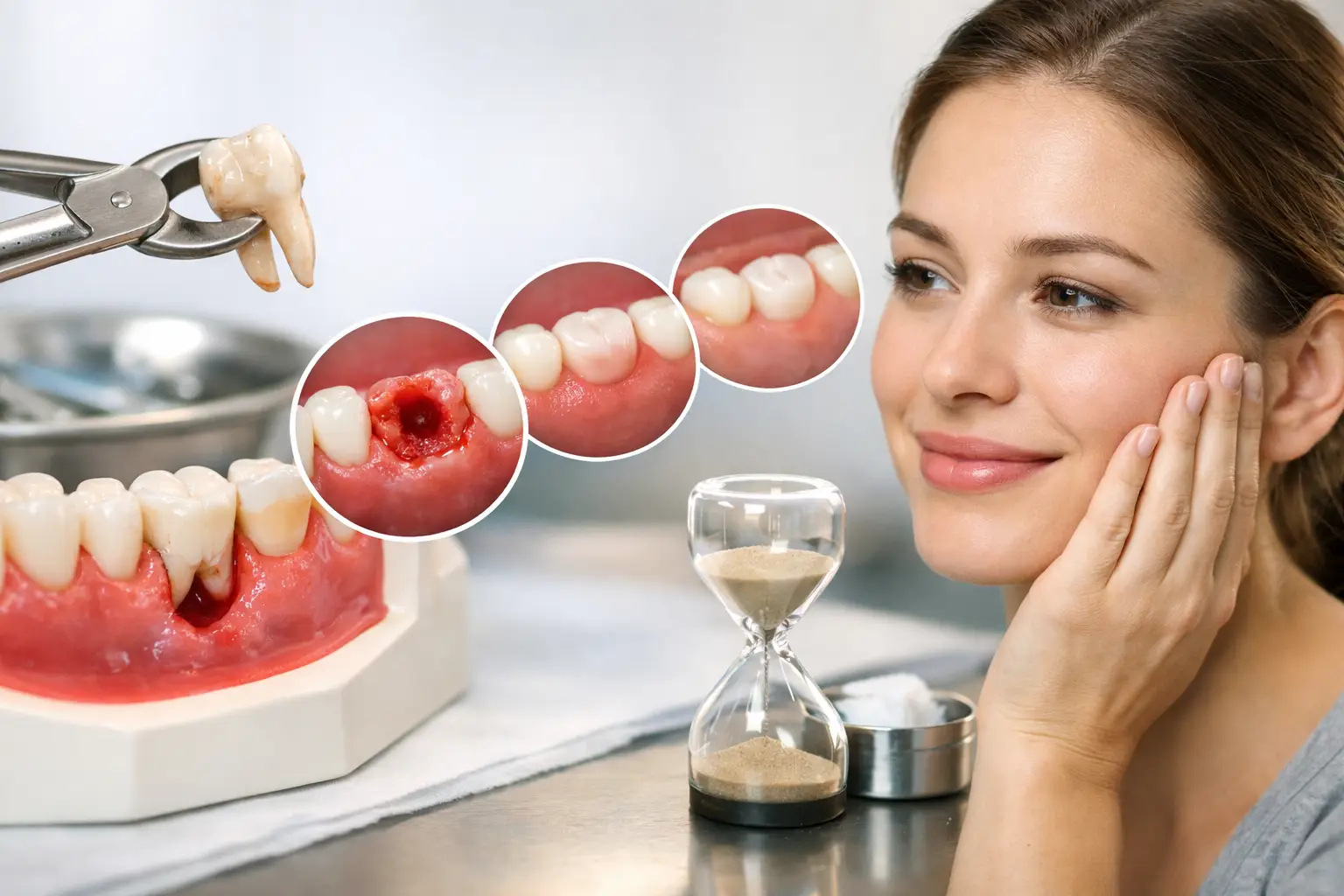
A tooth extraction can bring immediate relief from pain, but it also leaves you with understandable questions about what happens next. Knowing the tooth extraction healing timeline can help you protect the extraction site, feel more comfortable, and recognize when you need a dentist’s guidance. While every patient heals at a slightly different pace, most recoveries follow a predictable pattern.
The most important early step is protecting the blood clot that forms in the socket. That clot is not just part of the healing process. It covers the underlying bone and nerves while new tissue develops. Your dentist will give you personalized instructions based on the reason for your extraction, the location of the tooth, and whether the procedure was simple or surgical.
The Tooth Extraction Healing Timeline, Day by Day
The first 24 hours: Clot formation and rest
Some light bleeding or oozing is normal during the first several hours. Bite gently but firmly on the gauze your dental team provides, changing it as directed. A small amount of pink saliva can be expected, but heavy bleeding that does not slow with steady pressure deserves a call to your dentist.
Plan for a quiet day. Keep your head elevated when resting, use an ice pack on the outside of your cheek in short intervals, and take medications exactly as instructed. Your mouth may feel numb for a while, so avoid chewing until the numbness fades to prevent accidentally biting your lip, cheek, or tongue.
For the first day, do not rinse forcefully, spit, use a straw, smoke, or vape. These actions can dislodge the blood clot. Choose cool or lukewarm soft foods, such as yogurt, applesauce, scrambled eggs, mashed potatoes, or soup that has cooled down.
Days 2 and 3: Swelling may peak
Many patients are surprised when swelling is more noticeable on the second or third day than it was immediately after treatment. This is commonly part of normal inflammation, especially after a wisdom tooth or surgical extraction. Mild bruising, jaw stiffness, and tenderness are also possible.
You can usually begin gentle warm saltwater rinses after the first 24 hours, if your dentist has advised it. Let the water move around the area without vigorous swishing, then allow it to fall from your mouth rather than spitting hard. Continue brushing the rest of your teeth carefully, keeping the toothbrush away from the socket itself.
Pain should be manageable with the medication plan recommended by your dentist. It may not disappear immediately, but it should not become sharply worse after improving. A worsening, throbbing pain can be a sign that the clot has been disturbed.
Days 4 through 7: Early tissue repair
By the end of the first week, swelling and soreness should generally be easing. The socket may look white, cream-colored, or yellowish as healing tissue develops. This appearance can look concerning, but it is not automatically an infection. Avoid poking the area with your tongue, finger, toothpick, or toothbrush to check it.
Most people can return to normal daily activities within a few days, depending on the extraction and how physical their work is. Strenuous exercise, heavy lifting, and contact sports may need to wait longer because increased blood pressure can restart bleeding or disrupt healing. If you have sutures, your dentist will tell you whether they dissolve on their own or need to be removed.
What Healing Looks Like in the Following Weeks
During the second week, the gum tissue usually begins closing more visibly over the socket. You may be able to gradually add more foods to your diet as comfort allows, but avoid hard, sharp, crunchy foods that could become trapped in the area. Popcorn, chips, nuts, seeds, and crusty bread are common troublemakers during this stage.
For a straightforward extraction, the gum surface often heals substantially in one to two weeks. Deeper healing continues below the surface. The socket gradually fills with new tissue and bone over several weeks to months. A larger surgical site, wisdom tooth removal, bone infection, or a tooth removed because of advanced gum disease may take longer.
If you are planning a dental implant or other restoration, your dentist will discuss the timing that fits your oral health needs. Sometimes an implant can be placed soon after extraction. In other situations, allowing the site to heal or adding bone grafting material first creates a healthier foundation. There is no one-size-fits-all timeline, which is why a personalized treatment plan matters.
How to Support a Smooth Recovery
Gentle care makes a real difference during tooth extraction healing. Keep the area clean without disturbing it, follow medication directions, and stay well hydrated. Continue eating nourishing soft foods with protein, since your body needs fuel to repair tissue.
Smoking and vaping are among the biggest avoidable risks after an extraction. Nicotine reduces blood flow and the suction involved can loosen the clot, increasing the chance of dry socket and delayed healing. If you use tobacco or nicotine products, be honest with your dental team so they can offer practical guidance for protecting your recovery.
Certain health factors can also affect the pace of healing. Diabetes that is not well controlled, immune system conditions, some medications, and a history of difficult healing can all require closer follow-up. Tell your dentist about your full medical history, including prescription and over-the-counter medications. Honest communication helps your care team make the safest recommendations.
When to Call Your Dentist
A little soreness, swelling, and minor oozing are expected. However, you should contact your dentist promptly if you have bleeding that will not slow with pressure, swelling that becomes severe or continues to worsen after several days, fever, trouble swallowing or breathing, or a rash or other possible medication reaction.
Call as well if pain becomes intense around days three to five, especially if it radiates toward your ear or jaw and comes with an unpleasant taste or odor. This can be a symptom of dry socket, a painful condition where the protective clot is lost too soon. Dry socket is treatable, but it needs professional care to relieve pain and help the area recover comfortably.
Pus, increasing redness, persistent numbness, or pain that does not respond to the plan your dentist provided are also reasons to reach out. You never need to wait and wonder whether something is normal. A quick conversation can offer reassurance or allow treatment to begin before a small concern becomes more uncomfortable.
A Comfortable Recovery Starts With Clear Guidance
The tooth extraction healing timeline is not a deadline you have to meet perfectly. It is a helpful guide to what your body is working through, from the first protective blood clot to the gradual rebuilding of gum tissue and bone. Give yourself permission to rest, follow your instructions closely, and ask questions when something does not feel right.
At Shine & Sparkle Dentistry, we believe patients should feel informed and confident before, during, and after dental treatment. With gentle care and the right support, healing after an extraction can be a manageable step toward a healthier, more comfortable smile.