6505 W Park Blvd #132 Plano, TX 75093

Are Overdentures Right for Your Smile Needs?
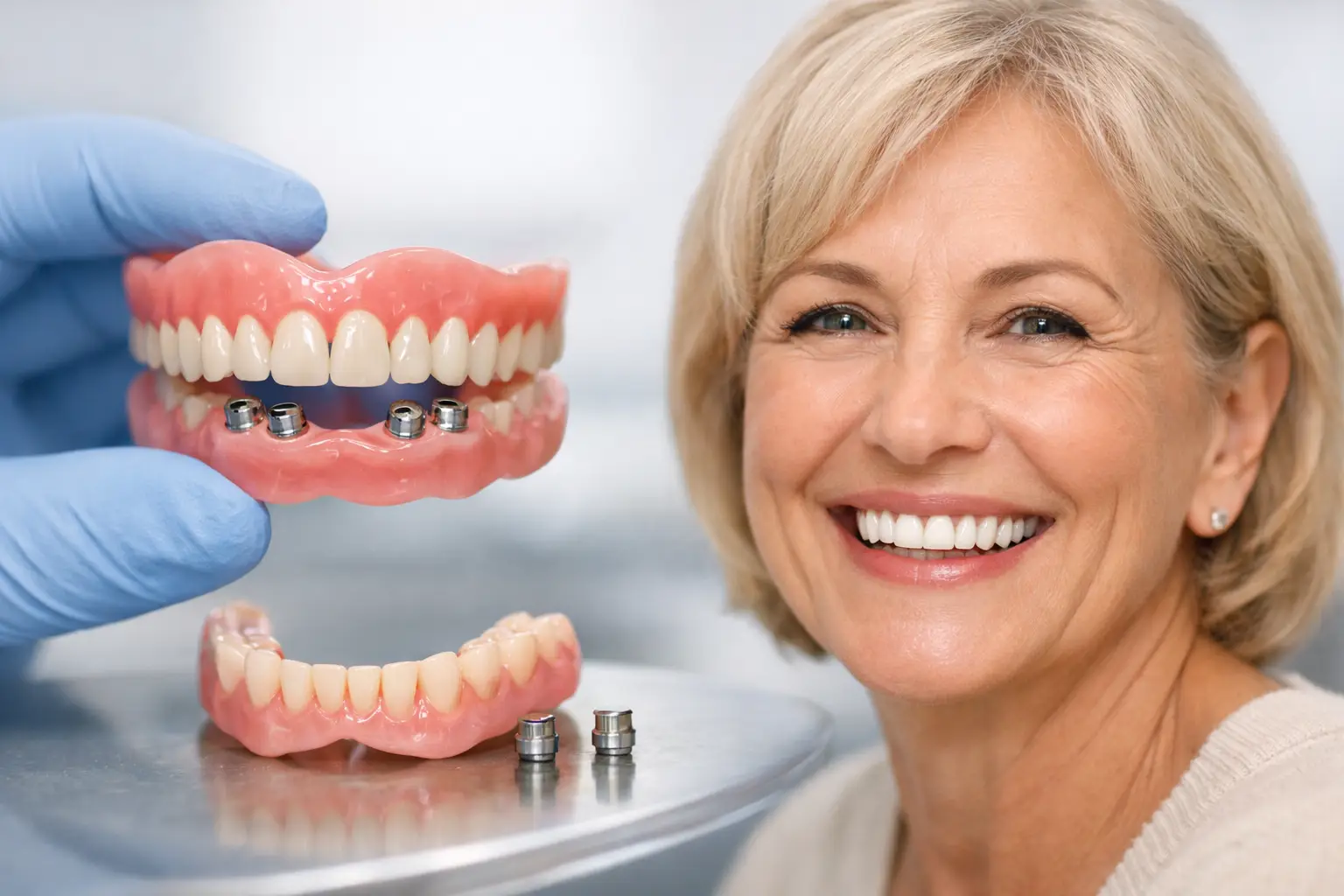
A denture that shifts when you laugh, eats only soft foods, or needs adhesive every morning can affect far more than your smile. Overdentures offer a more secure alternative for many people who are missing most or all of their teeth. By connecting a removable denture to dental implants, they can improve stability, comfort, and everyday confidence without requiring a permanently fixed full-arch restoration.
At Shine & Sparkle Dentistry, the right recommendation always starts with your needs, oral health, goals, and budget. Overdentures can be an excellent solution, but they are not automatically the best choice for every patient. Understanding how they work helps you make a decision you can feel informed and confident about.
What Are Overdentures?
An overdenture is a removable denture designed to fit over dental implants or, in some cases, carefully preserved natural tooth roots. The implants act as stable anchors. Instead of resting only on the gums, the denture attaches to those anchors through a system of snaps, bars, or similar connectors.
For patients with a fully toothless lower jaw, two implants are often used to stabilize an overdenture. More implants may be recommended depending on the jaw, bite, denture design, and desired level of support. Upper overdentures often need additional implants because the upper jawbone and forces of chewing are different.
The denture still comes out for cleaning and while you sleep unless your dentist provides different instructions. That is a key distinction: overdentures are generally removable, while a fixed implant bridge is secured in place by a dentist and is not taken out at home.
Why Traditional Dentures Can Feel Unstable
Conventional dentures have helped millions of people restore their smiles, and they remain a practical option in many situations. However, a lower denture has limited surface area to rest on. As the jawbone gradually changes after tooth loss, the fit may loosen further. Adhesives can help, but they do not stop the denture from moving under pressure.
That movement can create sore spots, make certain foods difficult to manage, and leave patients worried that their denture may lift during a conversation. An implant-supported overdenture is designed to reduce those concerns by giving the denture points of retention and support.
For many patients, the biggest difference is not simply stronger chewing. It is being able to speak, smile, and share a meal without constantly thinking about their teeth.
Benefits of Implant-Supported Overdentures
Because overdentures connect to implants, they can feel noticeably more stable than dentures that rely on suction, gum tissue, or adhesive alone. Patients may find it easier to eat a broader variety of foods, pronounce words clearly, and stay comfortable throughout the day.
Dental implants also stimulate the jawbone in the areas where they are placed. After teeth are lost, the bone naturally begins to shrink over time because it no longer receives pressure from tooth roots. Implants cannot reverse all prior bone loss, but they may help preserve bone around the implant sites.
There is also a practical advantage to removability. You can take an overdenture out to clean beneath it thoroughly. For some patients, this makes daily hygiene easier than caring for a fixed full-arch bridge. If a connector or denture tooth needs maintenance in the future, repairs may be more straightforward as well.
Overdentures Compared With Other Tooth Replacement Options
There is no single tooth replacement that fits every lifestyle. The best choice depends on anatomy, health history, expectations, and finances.
A conventional full denture is usually the most affordable way to replace a full arch of teeth. It does not require implant surgery, but it may move more easily and may need relines as the gums and jawbone change.
An overdenture adds implant support while remaining removable. It can be a meaningful middle ground for someone who wants more stability than a standard denture but prefers a removable appliance or does not want the cost and complexity of a fixed full-arch bridge.
A fixed implant-supported bridge is often the closest option to the feeling of having non-removable teeth. It can be highly stable, but it usually requires more implants, more detailed planning, and a greater financial investment. Cleaning is also different, since specialized tools are used around and beneath the bridge.
If you still have healthy natural teeth, preserving them is typically the first goal. Partial dentures, individual implants, crowns, or other restorative treatments may be more appropriate than replacing an entire arch.
Who May Be a Good Candidate for Overdentures?
A person may be a candidate for overdentures if they are missing all or most teeth in an arch, struggle with a loose denture, or want a more reliable alternative to daily adhesive. Good general health and healthy gums are helpful, but having existing dental concerns does not necessarily rule treatment out. Gum disease, decay, or infection should be addressed before implants are placed.
The amount and quality of available jawbone also matter. Modern planning tools allow dentists to evaluate the bone carefully and determine whether implants can be placed predictably. In some cases, bone grafting or a different treatment approach may be needed.
Smoking, uncontrolled diabetes, certain medications, and conditions that affect healing can change the treatment plan. Honest conversations about your medical history are essential. A thoughtful dentist will not promise a one-size-fits-all result. They will explain what is realistic, what preparation may be needed, and what alternatives deserve consideration.
What the Treatment Process Usually Looks Like
Your first visit typically includes a detailed exam, X-rays or 3D imaging when appropriate, and a conversation about how your current denture feels and functions. This is the time to mention sore spots, difficulty chewing, anxiety about treatment, and the look you want for your smile.
Once a plan is created, implants are placed into the jawbone during a carefully planned procedure. Comfort is a priority, and your dental team can discuss anesthesia and sedation options based on your needs. After placement, the implants need time to heal and bond with the bone. This healing period varies by patient and can take several months.
Some patients may receive a temporary denture while healing. Once the implants are ready, the attachments are placed and the final overdenture is designed or adjusted to connect securely. Follow-up visits are important because small refinements can make a significant difference in comfort, bite, and fit.
Daily Care Keeps Your Investment Healthy
Overdentures are durable, but they require consistent care. Remove the denture daily and clean it with products recommended by your dentist. Avoid hot water, which can warp denture materials. Clean around each implant, attachment, and gumline thoroughly, since plaque can still build up there.
Your dentist may recommend a soft brush, interdental brushes, water flossing, or other tools based on the attachment system you have. The connectors may eventually wear and need replacement. This is normal maintenance, not necessarily a sign that something has gone wrong.
Regular dental visits remain essential. Your dentist will check the implants, gum tissue, bite, denture fit, and attachment components. Early attention to looseness, clicking, soreness, or changes in fit can help prevent a small concern from becoming a bigger repair.
Questions Worth Asking at Your Consultation
It helps to ask how many implants are recommended and why, whether you will need a temporary denture, how long healing is expected to take, and what maintenance costs may arise over time. You should also ask whether your current denture can be adapted or whether a new one is recommended.
Cost is an understandable concern. The total can vary based on the number of implants, imaging, extractions, grafting, sedation, the final denture, and the type of attachment used. A clear treatment estimate should explain each part of care so there are no surprises. The lowest initial price is not always the best value if it leaves out essential planning, quality materials, or follow-up support.
A secure smile is not only about replacing teeth. It is about choosing a treatment that helps you eat comfortably, speak freely, and feel like yourself again. A personal consultation can clarify whether overdentures fit that goal and give you a path forward that feels comfortable, practical, and right for you.