6505 W Park Blvd #132 Plano, TX 75093

Dental Implant vs Bridge: Which Is Better?
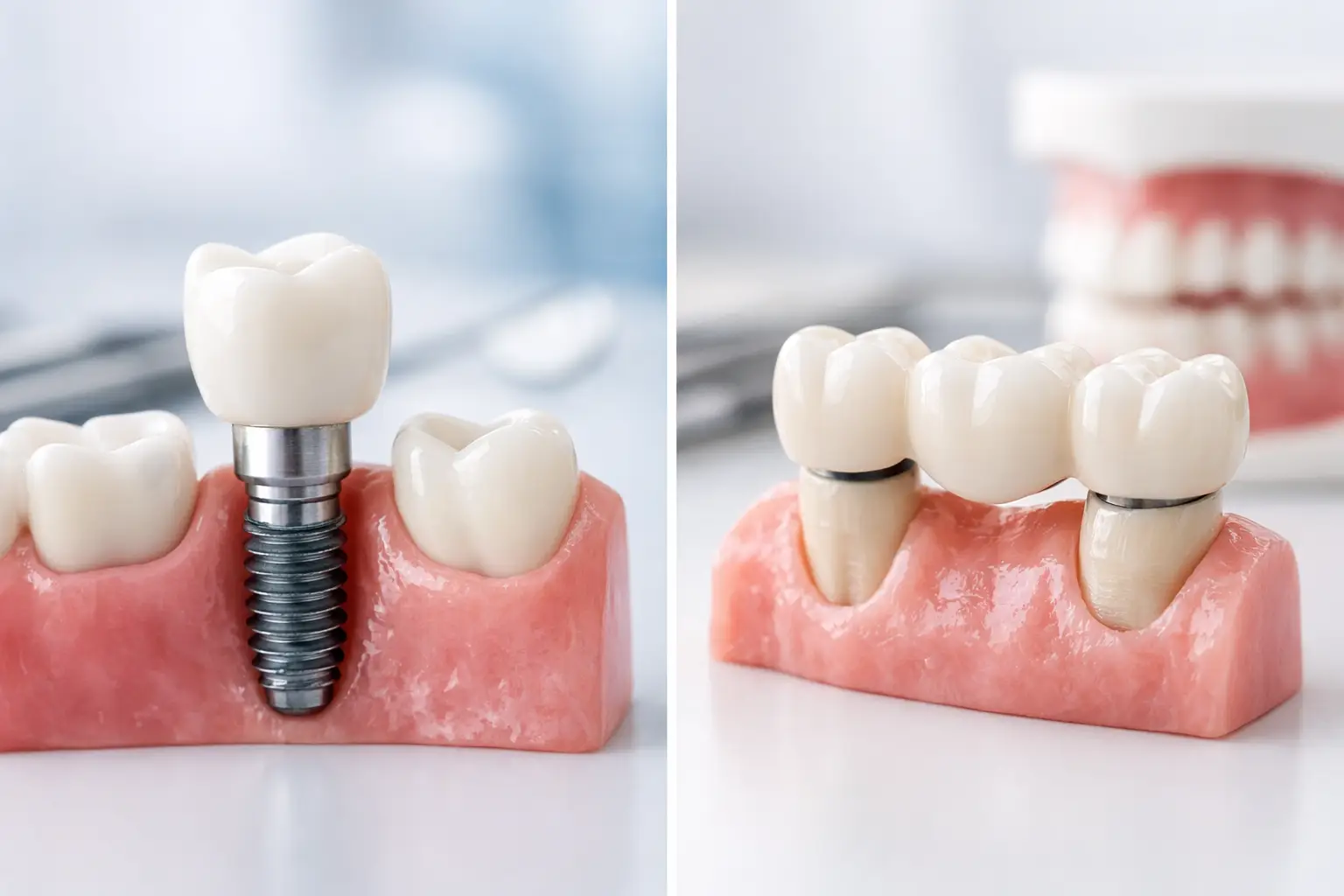
Losing a tooth can change more than your smile. It can affect how you chew, how clearly you speak, and how confident you feel when you laugh or meet someone new. If you are weighing a dental implant vs bridge, the right choice depends on your oral health, timeline, budget, and long-term goals.
For many patients, both options can restore function and appearance beautifully. The difference is in how they work, what they require from nearby teeth, and what kind of investment they represent over time. A careful exam and honest conversation with your dentist can make the decision feel much less overwhelming.
Dental implant vs bridge: the basic difference
A dental bridge fills the gap by anchoring an artificial tooth to the teeth next to the missing one. In many cases, those neighboring teeth need to be reshaped and covered with crowns so they can support the bridge.
A dental implant replaces the missing tooth root with a small titanium post placed in the jawbone. After healing, a custom crown is attached on top. Instead of relying on nearby teeth for support, the implant stands on its own.
That one difference matters quite a bit. A bridge depends on adjacent teeth. An implant depends on bone support and healing. Neither is automatically better for every person, but they serve patients in different ways.
When a bridge may be the better fit
A bridge can be an excellent choice when you want to replace a missing tooth relatively quickly and avoid oral surgery. For some patients, that alone makes the decision easier.
If the teeth next to the gap already need crowns because of large fillings, cracks, or wear, a bridge can make practical sense. In that situation, those teeth may benefit from crowns anyway, so using them to support a bridge may not feel like an extra sacrifice.
A bridge may also be preferred when medical conditions, certain medications, smoking habits, or limited bone support make implant treatment less ideal. Some patients simply want a predictable restorative option that can often be completed faster than an implant process.
That said, a bridge does come with trade-offs. Reshaping healthy neighboring teeth is a significant consideration. Bridges also do not replace the tooth root, which means they do not stimulate the jawbone in the same way an implant does.
When an implant may be the better fit
An implant is often the closest option to replacing a natural tooth because it restores both the root and the crown. That can lead to a very secure feel when chewing and speaking, and many patients appreciate that it does not depend on the teeth next door.
Implants are especially appealing when the surrounding teeth are healthy and untouched. Rather than preparing those teeth for crowns, your dentist can focus only on the missing tooth site.
There is also a long-term benefit beneath the surface. Because an implant stimulates the jawbone, it helps reduce the bone loss that can happen after a tooth is removed. Over time, that can support both facial structure and oral health.
The trade-off is time. Implant treatment usually takes longer because the area needs to heal after placement before the final crown is attached. Some patients may also need bone grafting first, which adds another step.
Appearance and everyday comfort
Both bridges and implants can look very natural when designed well. The shape, shade, and fit of the final restoration matter just as much as the treatment type.
From a comfort standpoint, implants often feel more like natural teeth because they are anchored directly in the jawbone. Patients frequently describe them as stable and easy to get used to. Bridges can also feel comfortable, but they may require a little more adaptation, especially at first.
Cleaning is different too. With an implant, you brush and floss around it much like a natural tooth, though technique still matters. With a bridge, you cannot floss straight through the contact area in the usual way, so special floss threaders or other cleaning tools are often needed to keep the area healthy underneath.
Cost now versus value over time
Cost is often one of the first questions patients ask, and understandably so. In many cases, a bridge has a lower upfront cost than a single implant. For families and working adults balancing other financial priorities, that can be a meaningful advantage.
But the lower initial fee does not always mean lower lifetime cost. A bridge may eventually need replacement, especially if one of the supporting teeth develops decay, fracture, or gum problems. If that happens, treatment can become more involved.
An implant generally costs more at the beginning, but it may offer strong long-term value because it is independent of neighboring teeth and can last many years with good care. The most honest answer is that cost should be looked at in context – not just what you pay this year, but what may serve you best over the next decade and beyond.
The role of your surrounding teeth and bone
One of the biggest deciding factors in a dental implant vs bridge discussion is the condition of the area around the missing tooth.
If the neighboring teeth are healthy, preserving them may point toward an implant. If those teeth already need crowns or have existing damage, a bridge may fit naturally into the overall treatment plan.
Bone levels matter too. An implant needs enough healthy jawbone for support. If bone has shrunk after the tooth was lost, grafting may be recommended. That does not automatically rule out an implant, but it can affect timing, cost, and complexity.
Gum health is another piece of the puzzle. Active gum disease should be treated before either option moves forward. A strong foundation gives any restoration a better chance of lasting well.
Timeline and treatment experience
For patients who want to finish treatment sooner, bridges often have the advantage. Once the supporting teeth are prepared and impressions are taken, the final bridge can usually be placed in a relatively short time frame.
Implants require more patience. After the implant post is placed, healing time allows the bone to bond with it. That process is important to long-term success, but it means your final crown does not usually go on right away.
Some patients are comfortable with a longer process because they want the benefits an implant can offer. Others prefer a faster route that restores the space more quickly. Neither priority is wrong. It simply depends on what matters most to you.
What about durability?
Both restorations can last for many years when they are well made and well maintained. Durability depends on several factors, including bite forces, oral hygiene, grinding habits, diet, and regular dental visits.
Implants have a reputation for excellent longevity, but they still require healthy gums and consistent care. A bridge can also perform very well, though the supporting teeth carry extra workload and need close attention over time.
This is one reason personalized planning matters so much. What looks durable on paper may not be the best option if your bite pattern, oral habits, or health history point in another direction.
How dentists help you choose confidently
The best treatment decision usually comes after a full exam, digital imaging, and a conversation about your goals. A patient who wants the most conservative approach for nearby teeth may lean toward an implant. A patient who wants to avoid surgery or complete care faster may feel better about a bridge.
At a comprehensive office like Shine & Sparkle Dentistry, that conversation can include the bigger picture too – not just how to replace one missing tooth, but how the choice fits your bite, gum health, appearance, and long-term dental plan. Good dentistry is not about pushing one option. It is about matching the solution to the person.
If you feel nervous about treatment, that matters as well. A caring team should explain what each option involves, what recovery is like, and what kind of maintenance to expect so you can move forward feeling informed instead of pressured.
The better choice is the one that fits you
If you are deciding between a bridge and an implant, try not to think of it as a test with one universally correct answer. A bridge may be the smartest choice for one patient because it is efficient, practical, and cost-conscious. An implant may be the better investment for another because it protects nearby teeth and supports the jawbone.
What matters most is choosing a solution that restores your comfort, protects your oral health, and helps you feel like yourself again. When your dentist takes time to explain the trade-offs clearly, the decision becomes less about guessing and more about confidence.