6505 W Park Blvd #132 Plano, TX 75093

Are Snap On Dentures Right for Your Smile?
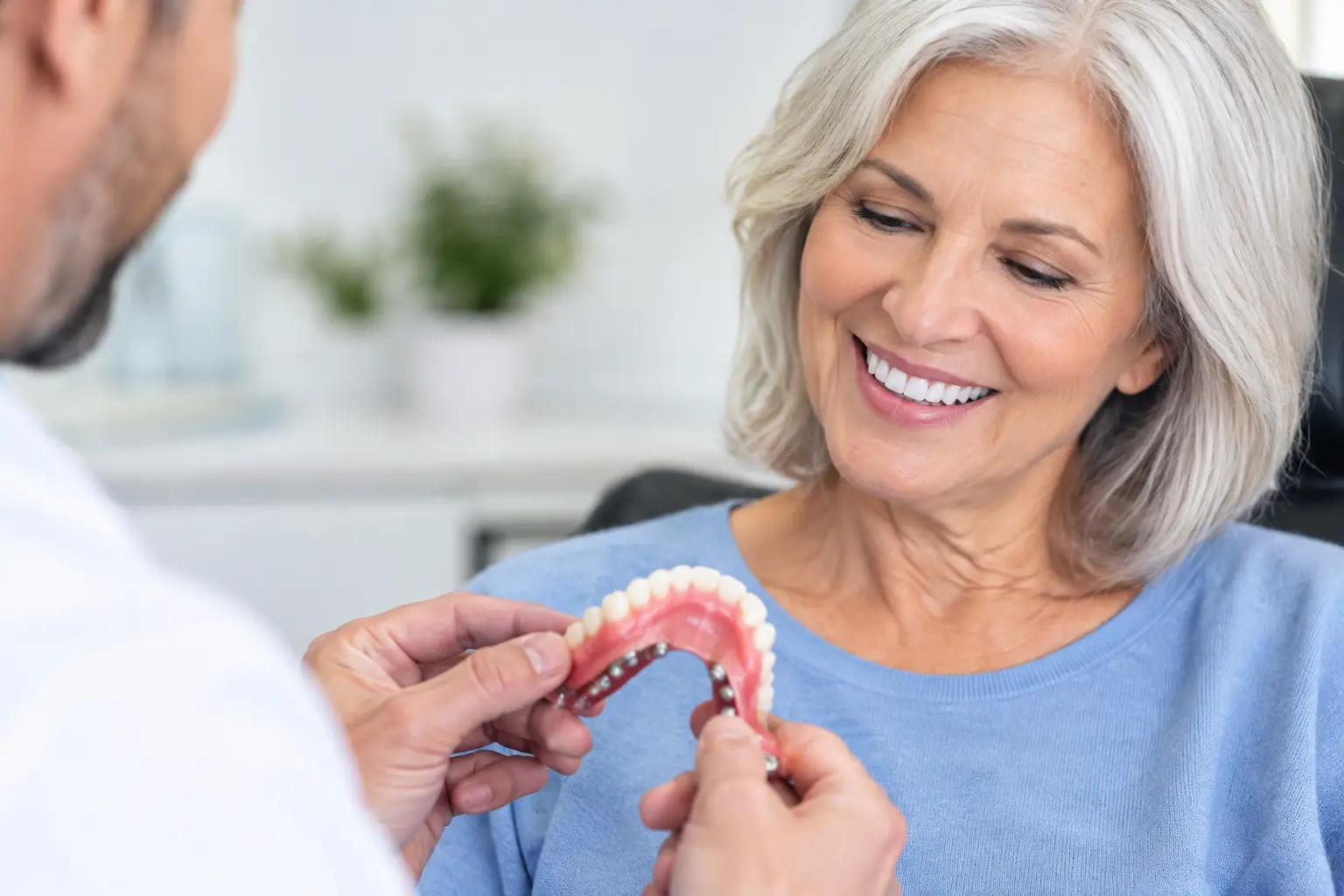
A lower denture that slips while you are speaking, laughing, or trying to enjoy dinner can make everyday moments feel stressful. Snap on dentures are designed to provide more stability than a traditional removable denture, helping many people eat, speak, and smile with greater confidence. They are not the right answer for every patient, but they can be a meaningful option for people who want a secure smile without choosing a fixed full-arch restoration.
What Are Snap On Dentures?
Snap on dentures are removable dentures that attach to dental implants placed in the jawbone. You may also hear them called implant-supported dentures, implant-retained dentures, or overdentures. Small connectors on the implants and denture allow the restoration to click into place securely, then be removed at home for cleaning.
Traditional dentures rest on the gums and depend on suction, fit, and adhesives for stability. Implant-supported dentures use implants as anchors. That added support can reduce movement, particularly in the lower jaw, where conventional dentures are often more likely to shift.
The word “snap” can be misleading. These are not one-size-fits-all dentures purchased online. A successful result requires careful planning, properly placed implants, and a custom denture designed around your bite, gums, facial appearance, and daily needs.
How Implant-Supported Dentures Work
Dental implants are small posts placed in the jawbone to replace missing tooth roots. After the area heals, attachments are added to the implants. The denture is made with corresponding components that connect to those attachments.
Many lower snap on dentures are supported by two or more implants. Upper dentures may require additional implants because the upper jaw and bite forces are different. The exact number depends on bone quality, anatomy, the type of attachment system, and how much stability you need.
Unlike a fixed implant bridge, snap on dentures are intended to come out. That makes them easier to clean thoroughly, which can be a practical advantage for many patients. The trade-off is that they do not feel exactly like natural teeth or a permanently fixed bridge, and the attachment components need routine maintenance over time.
Benefits That Matter in Everyday Life
For the right patient, the greatest benefit is often freedom from worrying about a loose denture. A more stable denture can make it easier to speak clearly, enjoy a wider range of foods, and feel less self-conscious in social settings.
Implants also stimulate the jawbone in the areas where they are placed. After teeth are lost, the jawbone naturally begins to shrink over time. While implants cannot reverse all bone loss, they can help preserve bone compared with wearing a conventional denture alone.
Patients also appreciate that the denture remains removable. You can take it out before bed, brush it carefully, and clean around the implants. For someone who wants dependable support without the cleaning routine and higher investment often associated with a fixed full-arch solution, this balance can be appealing.
Comfort can improve as well, but it is important to keep expectations realistic. A well-made implant-supported denture should fit comfortably, yet some adjustment time is normal. Your mouth, facial muscles, and speech patterns may need time to adapt to a new restoration.
Who May Be a Good Candidate for Snap On Dentures?
You may be a candidate if you are missing most or all teeth in one or both arches, wear loose or uncomfortable dentures, or have teeth that cannot be predictably saved. Healthy gums, adequate bone, and good overall health support successful implant treatment.
Even if you have been told you do not have enough bone for implants, do not assume your options are closed. Imaging and a detailed examination can reveal whether implant placement, bone grafting, or a different restoration plan may be appropriate. Every mouth is different, which is why a personal consultation matters more than a general answer online.
Certain conditions require extra planning. Untreated gum disease, uncontrolled diabetes, heavy smoking, clenching or grinding, and some medications can affect healing or long-term implant health. These factors do not always rule out treatment, but they should be discussed honestly before moving forward.
Snap On Dentures vs. Traditional Dentures
A conventional denture may be the best choice when a patient wants the lowest initial cost, needs a replacement quickly, or cannot undergo implant surgery. Modern conventional dentures can look natural and restore the appearance of a complete smile. Still, they can move during meals and often need relines as gum and bone contours change.
Snap on dentures generally offer more retention and chewing confidence because implants help hold the denture in place. They also involve surgery, a longer treatment timeline, and a higher upfront investment. Over time, attachment inserts may wear down and need replacement, and the denture may eventually need repair or relining.
The best choice is not automatically the most advanced option. It is the option that fits your oral health, budget, goals, and comfort level. Clear treatment planning should include a conversation about alternatives, expected maintenance, and what happens if an implant or attachment needs care later.
What Does the Treatment Process Look Like?
The first step is a comprehensive evaluation. Your dentist will review your medical and dental history, examine your gums and remaining teeth, assess your bite, and take detailed images of your jawbone. This planning stage helps determine whether implants are appropriate and how many may be needed.
If teeth need to be removed, a temporary denture may be used while your mouth heals. In some cases, implants can be placed at the same time as extractions. In others, healing or bone grafting may be recommended first. There is no single timeline that fits every patient.
Once implants are placed, they need time to integrate with the bone. After healing, your dentist takes precise impressions and designs the final denture for fit, function, and appearance. Several appointments may be needed to refine the bite, tooth shape, shade, and support for your lips and face.
At Shine & Sparkle Dentistry, treatment planning is centered on explaining each step clearly, so you can feel informed and confident rather than pressured into a decision.
Caring for Snap On Dentures
Good daily care protects both your investment and your oral health. Remove your denture as directed, brush it with a denture brush and nonabrasive cleanser, and rinse it thoroughly. Clean around each implant attachment with the tools recommended by your dental team, which may include a soft toothbrush, interdental brush, or water flosser.
Do not use regular toothpaste on the denture unless your dentist specifically recommends it. Many toothpastes are too abrasive and can dull the surface over time. Avoid hot water, which can warp certain denture materials.
Regular checkups remain essential, even if you no longer have natural teeth. Your dentist will examine the implants, gums, bite, denture fit, and attachment parts. Catching looseness, wear, inflammation, or damage early can often prevent a more complicated repair.
Questions to Ask Before You Decide
Before beginning treatment, ask how many implants are recommended and why, whether grafting may be needed, and what type of denture attachment will be used. You should also ask about the estimated timeline, what is included in the treatment cost, and the likely cost of future maintenance.
It is helpful to discuss your daily priorities, too. Do you want to eat more comfortably? Are you concerned about a denture moving while you talk? Do you prefer a removable restoration, or are you considering a fixed option? These answers guide a treatment plan that is built around your life, not simply a procedure.
A secure smile should not feel like a mystery or a sales pitch. With a thoughtful exam, honest guidance, and a plan tailored to your needs, you can choose a solution that helps you enjoy meals, conversations, and photos with more ease.