6505 W Park Blvd #132 Plano, TX 75093

Braces vs Clear Aligners: What is your choice?
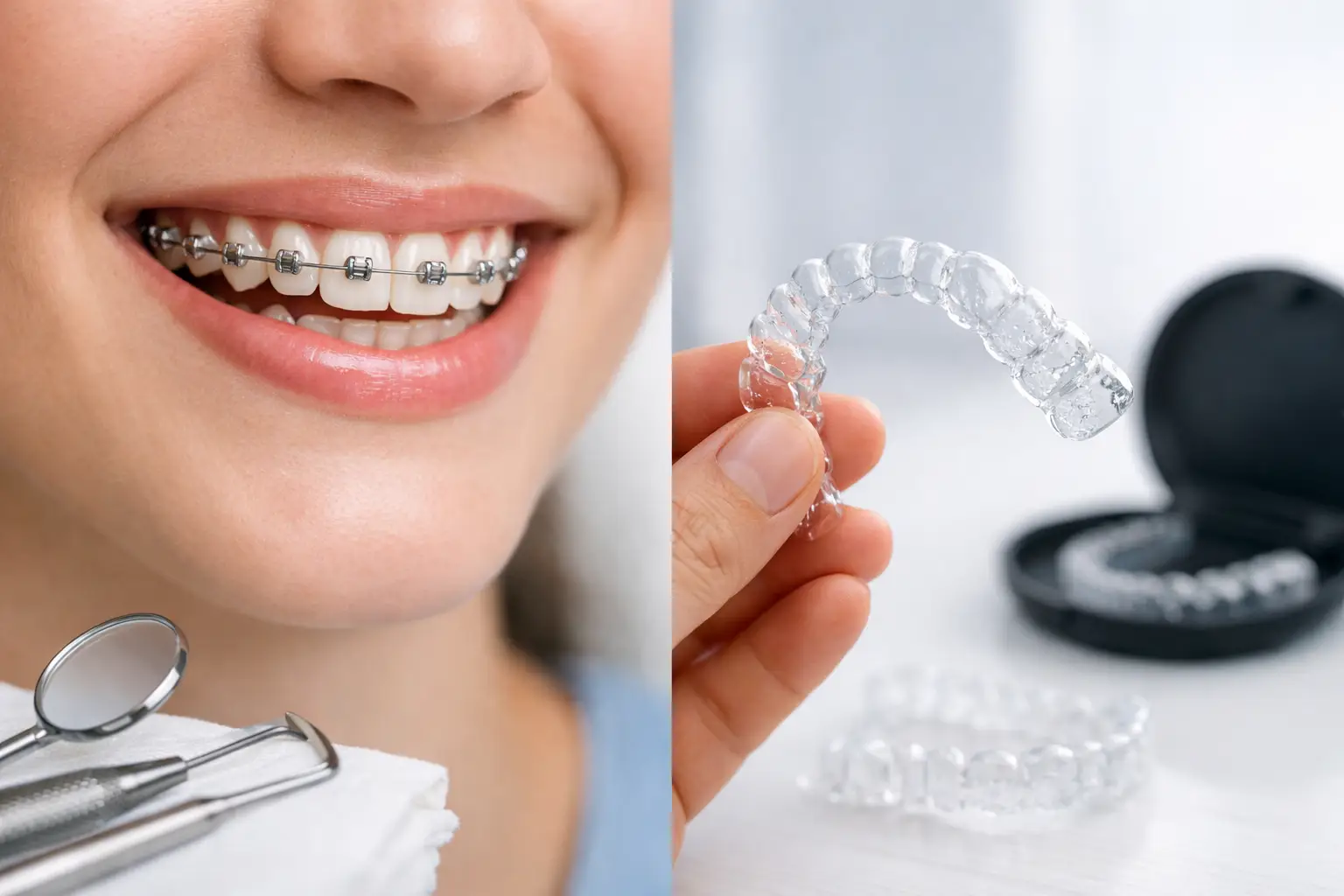
You may already know you want a straighter smile. The harder part is deciding between braces vs clear aligners when both can improve appearance, bite, and long-term oral health. For many adults and teens, the right choice comes down to something more personal than looks alone – it comes down to lifestyle, comfort, and how complex the tooth movement really is.
At first glance, clear aligners often seem like the easy winner. They are discreet, removable, and popular with professionals and older teens who want a more subtle treatment. Traditional braces, though, still have clear advantages in many cases, especially when teeth need more precise or significant movement. If you are weighing your options, it helps to understand what daily life with each one actually feels like.
Braces vs clear aligners: the biggest difference
The main difference is how each treatment moves your teeth. Braces use brackets and wires that stay attached to the teeth and apply steady pressure over time. Clear aligners use a series of custom-made plastic trays that fit snugly over the teeth and are switched out regularly as your smile shifts into place.
That difference affects nearly everything else – appearance, comfort, cleaning, food choices, and even how much responsibility falls on the patient. Braces are always working because they stay in place. Aligners only work as planned when they are worn for the recommended number of hours each day.
For some patients, that built-in consistency makes braces the more dependable option. For others, the flexibility of removing aligners for meals and brushing makes treatment feel much easier to manage.
Appearance and confidence during treatment
If appearance is high on your list, clear aligners usually have the edge. They are far less noticeable in photos, meetings, and everyday conversations. Many adults choose them because they want orthodontic treatment that does not draw attention at work or socially.
Braces are more visible, even when smaller or tooth-colored brackets are used. That does not mean they are a bad choice for image-conscious patients. Many teens and adults wear braces confidently, and some actually prefer not having to think about taking trays in and out throughout the day.
The emotional side matters here. If you know visible hardware will make you feel self-conscious, aligners may feel like a better fit. If you are less concerned about appearance and more focused on getting the most predictable correction for a complex issue, braces may bring more peace of mind.
Comfort and what day-to-day life feels like
Both options can cause pressure and soreness, especially after adjustments or when switching to a new aligner tray. That part is normal. Teeth need gentle force to move.
Clear aligners are often described as more comfortable because they do not have brackets or wires that can rub against the cheeks and lips. Even so, some patients find the edges of new trays slightly irritating at first, and the pressure can still feel noticeable.
Braces may cause more soft tissue irritation, particularly in the early weeks. Wax and a little patience usually help. On the other hand, braces do not need to be removed before every meal or snack, which can make daily life simpler for some people.
Comfort is not just about soreness. It is also about convenience. If removing aligners, storing them properly, and brushing before putting them back in sounds annoying, that is worth paying attention to. The most comfortable option is often the one that fits your routine without constant friction.
Which option works better for complex cases?
This is where the conversation becomes less about preference and more about clinical fit. Both braces and clear aligners can treat crowding, spacing, and many bite concerns. But they do not always have the same strengths.
Braces are often better for more complicated orthodontic issues, such as significant crowding, larger bite corrections, rotated teeth, or movements that need close control in multiple directions. Because they are fixed to the teeth, they allow the dentist or orthodontic provider to guide movement with a high level of precision.
Clear aligners can be very effective for mild to moderate alignment issues and many cosmetic concerns. In the right case, they can deliver excellent results. But treatment success depends heavily on wearing them consistently, and certain tooth movements may be less predictable depending on the starting position of the teeth.
That is why a proper exam matters. A treatment that looks more convenient on paper is not always the one that will give you the healthiest or most stable result.
Braces vs clear aligners for eating and cleaning
Food is one of the biggest practical differences between the two. With braces, certain foods are off limits or need extra caution. Sticky candy, hard snacks, popcorn, and anything that could bend a wire or loosen a bracket can create problems.
With clear aligners, you remove the trays before eating, so there are usually fewer food restrictions. That can feel like a major benefit if you do not want to change your diet during treatment.
Oral hygiene tells a similar story. Braces require more effort to brush and floss thoroughly around brackets and wires. It is completely manageable, but it does take more time and attention. Aligners make brushing and flossing easier because you remove them first. The catch is that you need to stay disciplined. If you snack often, skip brushing, or put trays back in without cleaning your teeth, plaque and odor can become an issue.
For patients who already have strong hygiene habits, aligners often feel simple. For younger patients or anyone who knows consistency is not their strength, braces may actually be easier to keep on track.
Treatment time and patient responsibility
Treatment length depends on the complexity of your case, not just the appliance itself. Some patients finish in well under two years. Others need longer. It varies.
What matters more is compliance. Braces keep working around the clock. Clear aligners need to be worn as directed, often 20 to 22 hours a day. If trays are left out too long, progress slows down. That can extend treatment and affect results.
This is one of the most common trade-offs in braces vs clear aligners. Aligners offer freedom, but they ask more from the patient. Braces offer less flexibility, but they remove some of the temptation to delay or forget treatment.
If you are choosing for a teenager, honesty matters. A very responsible teen may do great with aligners. A teen who misplaces things, snacks often, or resists routines may do better with braces.
Cost and value
Patients often assume clear aligners always cost more, but that is not necessarily true. Pricing depends on the complexity of treatment, the length of care, and the type of system being used. In some cases, the cost difference is small. In others, one option may be clearly more affordable.
The better question is value. The best value is the treatment that can safely and effectively get you to your goal without avoidable delays or compromises. If braces are more likely to solve your issue fully, they may be the better investment. If aligners can achieve the same result and make treatment easier to live with, they may be worth it.
A transparent consultation should include more than a quote. It should explain what each option can realistically accomplish for your smile.
How to choose the right fit for your smile
A good decision usually comes down to four things: the complexity of your case, how important appearance is during treatment, how disciplined you are with routines, and what will feel manageable in everyday life.
If you want the least noticeable option and your case is a strong fit, clear aligners can be an excellent choice. If your teeth need more involved movement, or if you would rather not worry about remembering to wear trays, braces may be the smarter path.
At Shine & Sparkle Dentistry, this conversation starts with listening. Some patients come in focused on appearance. Others care most about comfort, speed, or keeping treatment affordable. Honest guidance matters because the goal is not to push one option – it is to recommend the one that gives you the healthiest, most confident result.
The right orthodontic treatment should feel like it supports your life, not complicates it. When you understand the trade-offs clearly, the choice becomes much less stressful and a lot more empowering.