6505 W Park Blvd #132 Plano, TX 75093

Denture Care Tips for a Comfortable Smile
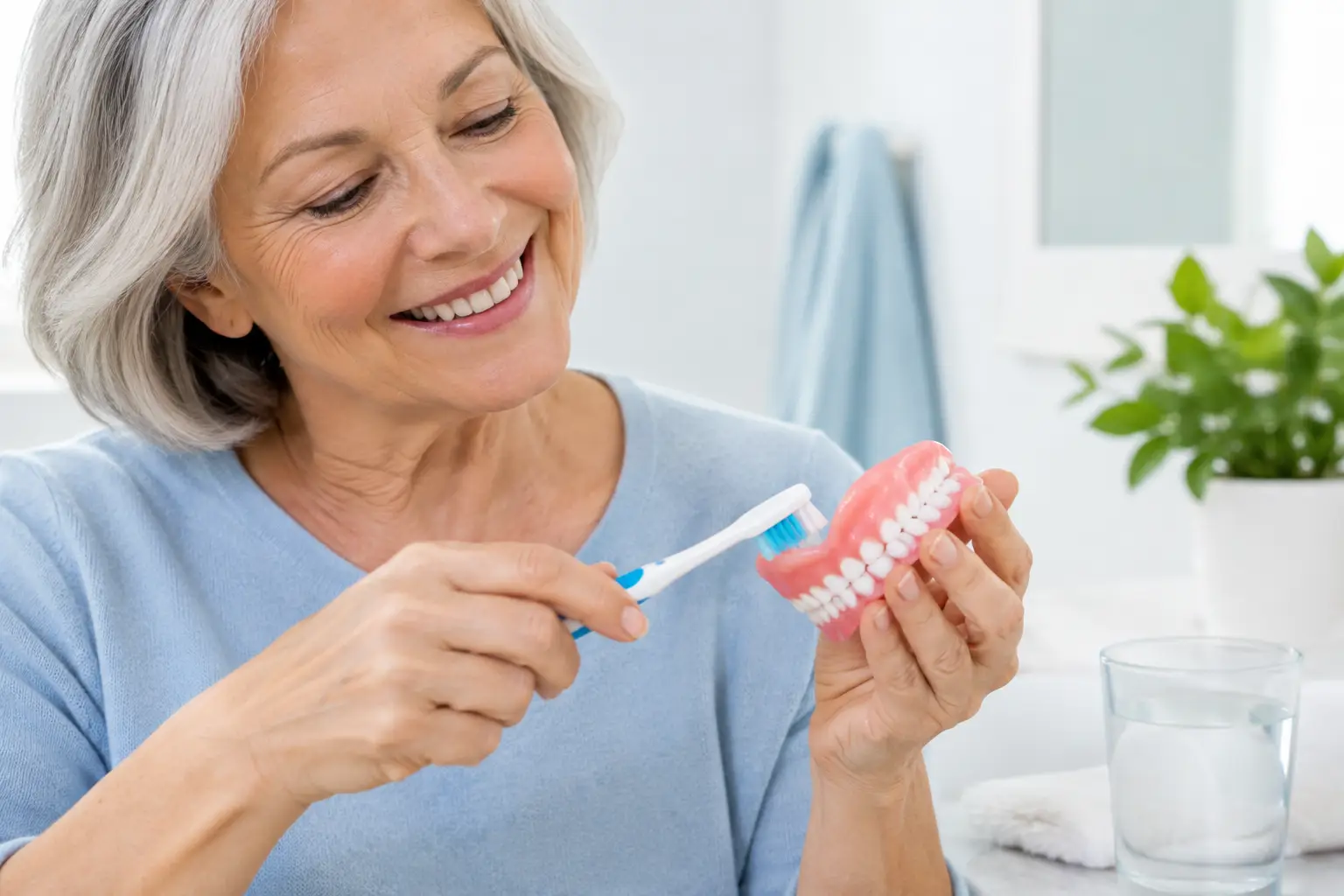
A comfortable denture should help you eat, speak, and smile with confidence – not leave you worrying about odor, irritation, or whether it might shift at the wrong moment. The right denture care tips protect both your appliance and the healthy tissues underneath it. A few consistent habits at home, combined with regular dental visits, can make a meaningful difference in how your dentures look, feel, and function.
Denture Care Tips for Every Day
Dentures collect plaque, food particles, and bacteria just as natural teeth do. They need daily attention, even if you wear a full denture and no longer have natural teeth in that arch. Skipping cleaning can lead to stains, unpleasant breath, sore gums, and fungal infections such as denture stomatitis.
Take dentures out after meals when possible and rinse them under cool or lukewarm running water. This simple step removes loose food debris before it has time to dry onto the appliance. Avoid hot water. Heat can cause many denture materials to warp, which may affect the fit.
Once a day, clean your dentures over a folded towel or a sink partially filled with water. Dentures can crack or break if dropped on a hard counter or into an empty sink. Use a soft denture brush or a soft-bristled toothbrush reserved only for your dentures. A denture cleanser is usually the best choice, but mild hand soap can work when recommended by your dental team.
Do not use regular toothpaste, whitening toothpaste, abrasive powders, bleach, or household cleaners. Many of these products are too harsh for denture acrylic and can leave tiny scratches. Those scratches make it easier for bacteria and stains to cling to the surface. Whitening toothpaste will not whiten dentures either, because denture teeth are made from different materials than natural enamel.
After brushing, rinse dentures thoroughly before placing them back in your mouth. This matters especially if you use a soaking solution. Cleaning products are not meant to be swallowed or left on the appliance when you wear it.
Clean Your Mouth, Too
Removing dentures is only half of a healthy routine. Gently brush your gums, tongue, palate, and any remaining natural teeth with a soft toothbrush. This helps remove bacteria, stimulates circulation in the gums, and leaves your mouth feeling fresher.
If you have partial dentures, floss and brush your natural teeth carefully every day. The teeth that support a partial denture can be more vulnerable to decay and gum disease when plaque builds around clasps or beneath the appliance. A fluoride toothpaste may be especially helpful for protecting these remaining teeth.
Soak Dentures the Right Way
Most removable dentures should stay moist when they are not being worn. Drying out can affect their shape over time. Place them in clean water or a denture-soaking solution overnight, following the product instructions and your dentist’s recommendations.
Taking dentures out while you sleep gives your gums and jaw tissues time to rest. For many people, this reduces pressure and lowers the risk of irritated tissue. There are exceptions: some patients have medical, functional, or comfort-related reasons to wear dentures at night. Your dentist can give guidance based on your specific smile and health needs.
If your denture has metal clasps, ask which soaking products are safe for it. Certain cleaners may damage metal components. And never put dentures in hot water, a dishwasher, or a microwave. A quick shortcut can turn into an expensive replacement.
Watch for Changes in Fit and Comfort
A denture that fit well last year may not fit well today. Your jawbone and gum tissue naturally change over time, particularly after teeth have been removed. Weight changes, certain medications, and health conditions can also affect how your dentures feel.
A small amount of adjustment while learning to wear new dentures is normal. You may notice increased saliva, slight pressure, or temporary changes in speech. Reading aloud and starting with soft foods cut into small pieces can help you adapt. Avoid trying to adjust the denture yourself with a file, glue, or over-the-counter repair kit. These attempts can damage the appliance and make a professional repair more difficult.
Call your dentist if you notice persistent soreness, sharp edges, clicking, slipping, cracking, or a bite that suddenly feels different. Do not wait for a sore spot to become severe. A minor adjustment may be all that is needed to restore comfort.
Denture adhesive can improve stability for some patients, but it should not be used to compensate for a poorly fitting denture. Adhesive is a tool, not a permanent solution. If you need more adhesive than usual or your denture is moving regularly, it is time for an exam.
Eat and Speak With More Confidence
Dentures require a little patience, especially during the first several weeks. Start with softer foods, chew slowly, and use both sides of your mouth at the same time. This balanced pressure helps reduce tipping. As you become more comfortable, gradually add a wider range of foods.
Very sticky foods, hard candies, tough meats, and foods with small seeds can be challenging even for experienced denture wearers. You do not necessarily have to avoid every favorite food forever, but preparation matters. Cut firmer foods into smaller pieces, take measured bites, and be cautious with anything that could pull on the denture.
Speech usually improves as your cheeks, tongue, and lips learn to work with the denture. Practice words that include “s,” “f,” and “th” sounds, or read a page aloud each day. If speech remains difficult after the adjustment period, your dentist can evaluate the fit, bite, and tooth position.
Be Gentle With Dentures and Honest About Repairs
Dentures are durable, but they are not indestructible. Never bend metal clasps, chew ice, or use your dentures to open packaging. Keep them out of reach of pets, too. Dogs are particularly drawn to the scent of dentures and can damage them quickly.
If a denture cracks, breaks, or loses a tooth, keep all the pieces and contact your dental office. A professional repair is safer and more reliable than using super glue or an at-home repair product. Household adhesives can be toxic, alter the fit, and interfere with a proper repair later.
The same advice applies to loose teeth on a denture. Even if the appliance still seems wearable, continuing to use it can create sharp edges or place uneven pressure on your gums.
Keep Regular Dental Appointments
Dentures do not eliminate the need for dental care. Regular exams allow your dentist to check the fit of your appliance, examine your gums and oral tissues, screen for oral cancer, and evaluate any remaining teeth. Professional cleaning can also remove stubborn buildup that is difficult to manage at home.
Many dentures eventually need a reline, adjustment, repair, or replacement. The timing varies. A relined denture may improve the fit by reshaping the surface that rests against your gums, while a replacement may be needed when teeth are worn, the base is damaged, or changes in your mouth have become more significant.
For patients frustrated by movement in a lower denture, implant-supported options may offer added stability. They are not the right choice for everyone, and treatment depends on bone health, medical history, budget, and personal goals. A one-on-one conversation can help you understand what will provide the most comfortable, dependable result.
At Shine & Sparkle Dentistry, we believe denture care should feel manageable, not overwhelming. If your dentures are causing discomfort or no longer feel like they belong in your smile, a gentle evaluation can provide clear answers and a practical path forward.
Your dentures are part of your daily life, and they deserve more than a quick rinse at the end of the day. A careful routine and timely professional care can help you protect your comfort, your oral health, and the confidence that comes with a smile that feels like your own.