6505 W Park Blvd #132 Plano, TX 75093

How to Clean Aligners Without Damaging Them
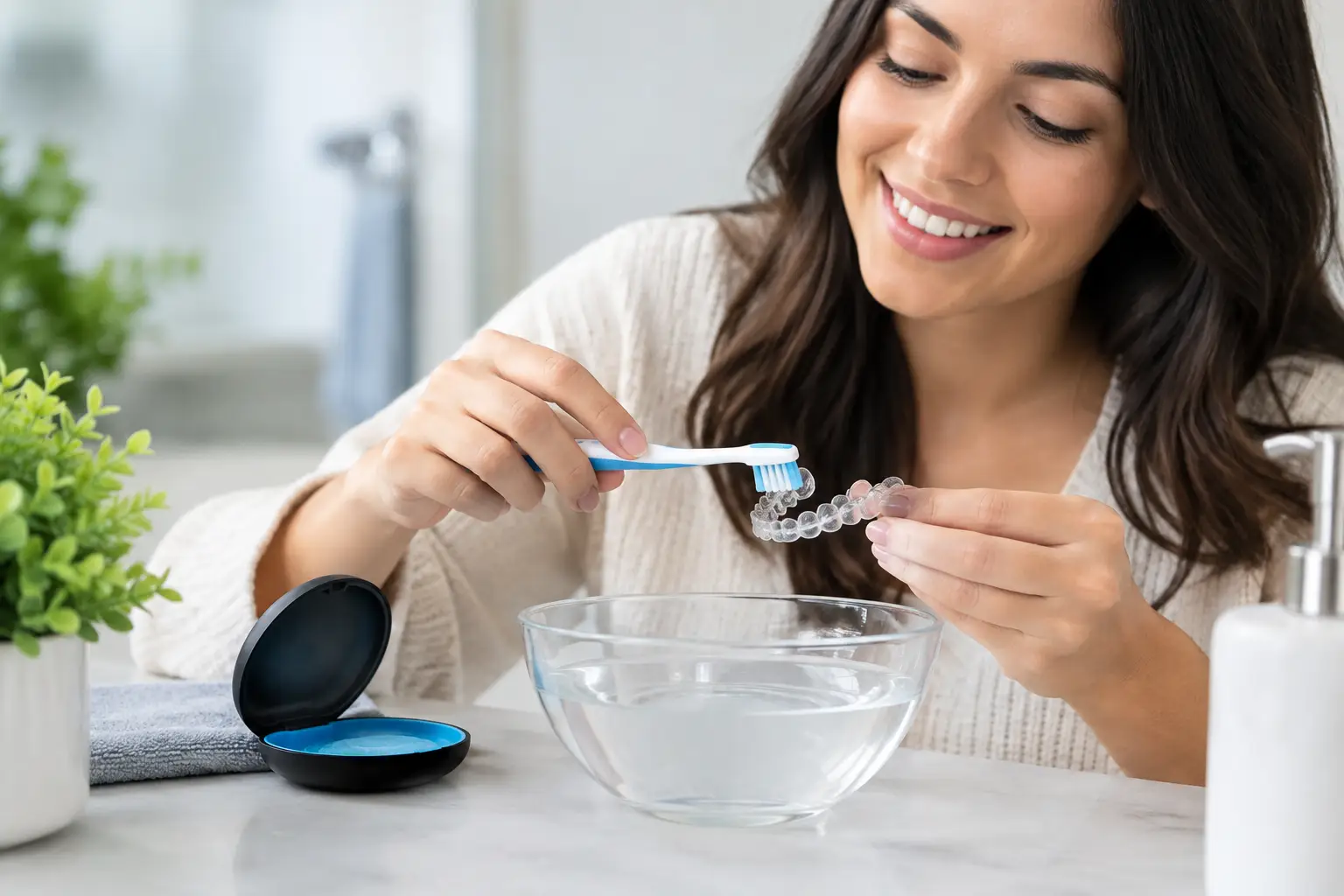
Clear aligners are designed to be discreet. That can make it easy to forget that they collect the same bacteria, saliva, and food residue your teeth do. Knowing how to clean aligners correctly helps keep them clear, fresh, and comfortable while protecting the healthy smile you are working toward.
A cloudy tray, unpleasant odor, or sticky feeling does not necessarily mean you have done anything wrong. It usually means your aligners need a more consistent cleaning routine. The good news is that daily care is simple, gentle, and takes only a few minutes.
Why clean aligners need daily attention
Aligners sit closely against your teeth for most of the day. If plaque, bacteria, or food particles remain inside the trays, they are held against your enamel rather than being rinsed away naturally by saliva. Over time, this can contribute to bad breath, staining, and a greater risk of tooth decay or gum irritation.
Clean trays also look better. Clear plastic can become yellowed or cloudy when it is exposed to colored drinks, food residue, or improper cleaning products. Because aligners are meant to be nearly invisible, keeping them clean is part of keeping your treatment confident and low-profile.
For most patients, aligners should be worn about 20 to 22 hours each day. That means the trays spend a great deal of time in your mouth, so a quick rinse alone is not enough. A reliable daily routine protects both your trays and your oral health.
How to clean aligners every day
The best time to clean your aligners is when you remove them to eat or brush your teeth. Rinse them with cool or lukewarm water as soon as you take them out. This prevents saliva and plaque from drying on the plastic, which makes buildup harder to remove later.
Then, gently brush the inside and outside of each tray with a soft-bristled toothbrush and clear, mild liquid soap. Use a brush reserved for your aligners if possible. Your regular toothbrush may carry toothpaste particles that can scratch the plastic.
Rinse the trays thoroughly before placing them back in your mouth. Any soap residue can leave an unpleasant taste, so take a moment to make sure the water runs clear and the aligners feel smooth.
Brush and floss your teeth before reinserting your aligners, especially after meals. Putting trays back over unbrushed teeth traps food particles and sugars against your enamel. If you are away from home, rinse your mouth and aligners with water until you can brush properly.
Give them a deeper clean when needed
Daily brushing is usually enough for routine care, but aligners may need a deeper clean if they look cloudy, smell unpleasant, or develop visible buildup. You can soak them in a cleaning solution made specifically for clear aligners, retainers, or dentures. Follow the product instructions closely, including the recommended soaking time.
After soaking, brush the trays lightly and rinse them well with water. Do not assume that a longer soak will produce a better result. Some products can be too harsh if used incorrectly, and your aligner provider may have specific recommendations for the material used in your treatment.
If you notice a chalky white film, it may be mineral buildup from saliva or hard water. A purpose-made aligner cleaner can often help. If the film does not come off easily, ask your dental team before trying stronger home remedies.
What not to use on clear aligners
Clear aligners are durable enough for everyday treatment, but they are still made of thin thermoplastic. Heat, abrasives, and harsh chemicals can warp, scratch, or discolor them. Avoid these common mistakes:
- Hot water, boiling water, dishwashers, or microwaves. Heat can change the tray’s shape, which may affect its fit.
- Toothpaste, whitening toothpaste, and abrasive powders. These can leave tiny scratches that make aligners look dull and give bacteria more places to cling.
- Colored mouthwash. Blue, green, or purple rinses can tint clear plastic.
- Bleach, alcohol-based cleaners, and harsh household products. These are not intended for something that will sit against your teeth and gums.
You may see suggestions online to use vinegar, baking soda, or other household mixtures. Results can vary, and some methods can leave an odor, affect the surface of the plastic, or simply fail to remove buildup. When in doubt, choose products made for aligners and follow the instructions from your dentist or orthodontic provider.
Everyday habits that keep trays clear
Water is the safest drink while your aligners are in. Coffee, tea, red wine, soda, sports drinks, and colored beverages can stain the trays and allow sugar or acid to sit against your teeth. Even clear drinks can be a concern if they contain sugar or acid.
Remove your aligners before eating anything other than water. Chewing with trays in place can damage them, trap food under the plastic, and make them harder to clean. Keep a protective case with you so you do not wrap aligners in a napkin, where they can easily be thrown away.
After removing a tray, rinse it and place it in its case if you are not cleaning it immediately. Leaving it exposed on a counter or tucked into a pocket creates more opportunities for damage and bacteria. A clean case matters too, so wash it with mild soap and water regularly and let it dry completely.
If you smoke or use tobacco, your trays may stain and develop odors faster. Tobacco also affects gum health and can work against the clean, healthy appearance many patients want from orthodontic treatment. Reducing or stopping tobacco use benefits your smile well beyond aligner care.
When your aligners need professional attention
Some changes should not be handled with extra scrubbing at home. Contact your dental provider if an aligner is cracked, warped, loose, sharp, or no longer fitting the way it did before. Do not try to bend it back into shape. A poorly fitting tray can interfere with planned tooth movement.
You should also call if you have persistent bad breath, bleeding gums, tooth sensitivity, or a strong odor that returns soon after cleaning. The source may be your teeth or gums rather than the aligners themselves. Treating the underlying issue early is more comfortable and often less complicated.
If you lose an aligner, use the most recent tray only if your provider has instructed you to do so, then contact the office promptly. Skipping ahead to the next tray without guidance can affect your treatment plan.
A simple routine worth keeping
A consistent routine is more valuable than an elaborate one. Rinse aligners every time you remove them, gently clean them each day, brush and floss before putting them back in, and use a proper soaking cleaner when needed. These small habits help your trays stay clear and your treatment stay on track.
At Shine & Sparkle Dentistry, we want every patient to feel informed and confident throughout orthodontic care. If your aligners are not fitting comfortably, are difficult to clean, or you are unsure which products are safe, a quick conversation with your dental team can provide clear, personalized guidance.
Your aligners are working quietly for your smile nearly all day. Giving them a few minutes of gentle care helps them stay fresh, discreet, and ready to do their job.