6505 W Park Blvd #132 Plano, TX 75093

Overdenture vs All on 4: Which Is Better?
A loose denture can turn simple moments – ordering lunch, laughing with friends, speaking in a meeting – into sources of stress. If you are researching overdenture vs all on 4 treatment, you are likely looking for more than replacement teeth. You want stability, comfort, a natural-looking smile, and an honest answer about what makes sense for your health and budget.
Both options use dental implants to hold replacement teeth in place, but they work differently. The right choice depends on your bone health, goals, lifestyle, current denture experience, and the type of daily care you prefer. A thoughtful exam and conversation can make this decision feel much more manageable.
Overdenture vs All-on-4: The Core Difference
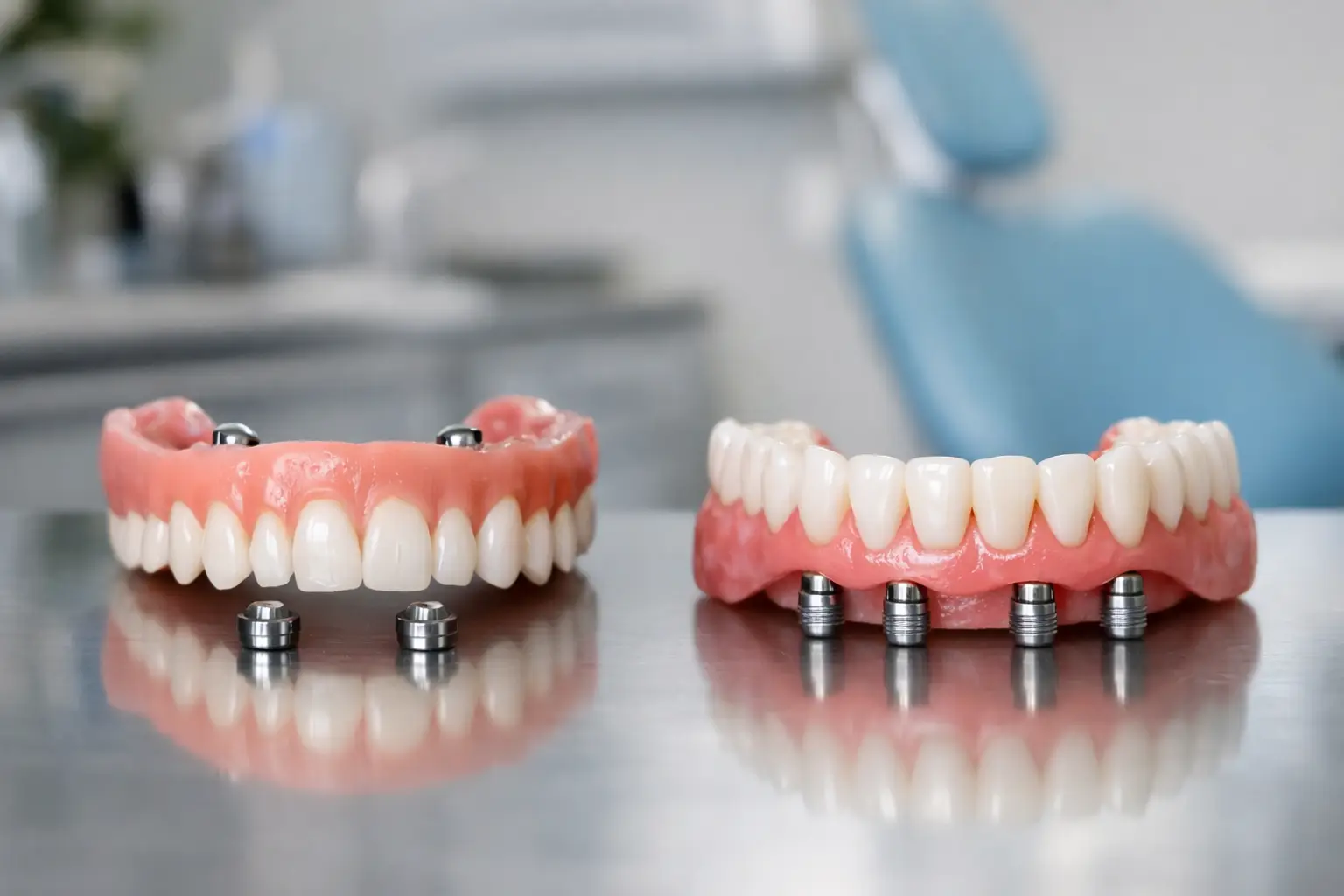
An implant-supported overdenture is a removable denture that attaches to dental implants. It is more secure than a traditional denture, yet you take it out for cleaning, usually at night. Depending on the jaw and treatment plan, an overdenture may be supported by two, four, or more implants.
All-on-4 is a full-arch fixed restoration supported by four strategically placed implants. The replacement teeth are secured to the implants and can only be removed by a dentist. Because the teeth stay in place, many patients feel that All-on-4 is closer to having natural teeth.
Neither option is automatically better for every person. An overdenture can be an excellent, life-changing step up from a loose conventional denture. All-on-4 can offer outstanding confidence and convenience for someone who wants a fixed full-arch solution. The most appropriate recommendation comes from your individual anatomy and priorities, not from a one-size-fits-all promise.
How an Implant Overdenture Works
An overdenture rests on the gums but gains support and retention from implants. Small attachments connect the denture to the implants, helping prevent the slipping, rocking, and adhesive dependence that many traditional denture wearers dislike.
For the lower jaw, two implants are often enough to make a meaningful improvement in stability. Four implants may be recommended when additional support is needed. Upper overdentures may require more implants because upper bone is generally less dense and because an upper denture covers a larger area.
Benefits of an overdenture
The removable design makes cleaning straightforward. You remove the denture, clean it and the implant attachments, and place it back in. This can be reassuring for patients with limited hand mobility or those who want a familiar denture routine with much better stability.
Overdentures also tend to have a lower initial cost than a fixed full-arch restoration because the prosthesis and implant plan are often less complex. They can be a practical choice for patients who need a secure solution but want to keep treatment more affordable.
Because implants stimulate the jawbone, an overdenture may also help slow the bone loss that occurs after teeth are lost. It will not restore all lost bone, but it can offer important long-term advantages over a denture that sits on the gums alone.
Things to consider
An overdenture is still removable. Some patients are perfectly comfortable with that, while others strongly prefer teeth that stay in place at all times. Attachments and inserts can wear over time and may need periodic replacement. The denture itself may also need adjustments, relining, or eventual replacement as your mouth changes.
Although chewing is usually much improved compared with traditional dentures, a removable prosthesis may not feel quite as fixed or as natural under pressure as an All-on-4 restoration.
How All-on-4 Works
All-on-4 replaces an entire upper or lower arch with a fixed bridge supported by four implants. The back implants are commonly placed at an angle, which can allow the dentist to use available bone more effectively and avoid certain anatomical structures. For some patients, this may reduce the need for bone grafting, though grafting is still necessary in some cases.
After implant placement, a temporary fixed set of teeth may be provided when conditions allow. Following healing, the temporary is replaced with a carefully designed final restoration that supports your bite, appearance, and speech.
Benefits of All-on-4
The biggest advantage is fixed stability. Your teeth do not come out at bedtime or move while you eat. Many patients appreciate being able to speak, smile, and enjoy a wider range of foods without worrying about a denture shifting.
All-on-4 also avoids the bulky palate coverage associated with many upper removable dentures. That can make food taste more natural and may help some patients feel less aware of the prosthesis. The final teeth are designed to complement your facial features and smile, which can be especially meaningful when failing teeth have affected your confidence.
For people who have spent years managing loose dentures or painful, damaged teeth, a fixed full-arch option can feel freeing. Still, it is a significant restorative treatment and should be planned with care.
Things to consider
All-on-4 usually requires a greater upfront investment than an overdenture. It also requires daily cleaning beneath the fixed bridge. You cannot remove it yourself, so you will need to use tools such as a water flosser, interdental brush, or floss threader as instructed by your dental team.
Regular professional maintenance matters. Even though replacement teeth cannot get cavities, the tissues around implants can develop inflammation or infection if plaque is not removed effectively. The restoration may also need repairs or maintenance over the years, particularly if you grind your teeth or place heavy pressure on the bridge.
Comparing Comfort, Appearance, and Daily Life
Both treatments can greatly improve comfort when compared with unstable traditional dentures. The difference is in the experience you want day to day.
An overdenture offers a secure fit with the ability to remove and thoroughly clean the prosthesis. It may feel like a familiar and comfortable transition for someone who already wears dentures. All-on-4 stays in place and generally provides the strongest sense of permanence. For many patients, that fixed feeling is worth the added treatment cost and hygiene commitment.
Appearance depends on the quality of planning and design, not simply on which option you choose. With either treatment, your dentist should consider tooth shape, shade, lip support, facial proportions, speech, and the way your teeth show when you smile. A well-designed overdenture can look beautiful, and so can an All-on-4 bridge.
Your bite is equally important. Full-arch restorations should be designed to function comfortably, not just look attractive in photos. Patients who clench or grind may need additional protection, such as a night guard, and more frequent maintenance checks.
Who May Be a Good Candidate?
You may be a candidate for an implant overdenture if you are missing all or most teeth in an arch, struggle with a loose denture, and want more stability without choosing a fixed bridge. It can also be a sensible option when budget, anatomy, or personal preference makes a removable solution the better fit.
All-on-4 may be a strong choice if you have failing teeth throughout an arch or are already missing all teeth and want a fixed result. Good general health, healthy gums or treatable gum disease, and adequate bone are all important considerations. Smoking, uncontrolled diabetes, untreated periodontal disease, certain medications, and teeth grinding do not always rule out treatment, but they need to be discussed openly.
A detailed evaluation should include digital imaging, a review of your medical history, a bite assessment, and a conversation about your expectations. If remaining teeth are salvageable, preserving them may sometimes be healthier and more conservative than removing them for a full-arch restoration. Honest guidance should always include that possibility.
Cost and Long-Term Value
When comparing cost, look beyond the first number. An overdenture may cost less initially, but it has ongoing needs such as attachment replacement, relines, and eventual denture replacement. All-on-4 usually costs more at the start, with long-term maintenance involving professional cleanings, repairs, and possible replacement of components or the final bridge over time.
Insurance coverage varies widely and may be limited for implant treatment. A clear treatment estimate should explain what is included: extractions, imaging, sedation if needed, bone grafting, temporary teeth, the final restoration, and follow-up care. Asking these questions early helps you compare options fairly and avoid surprises.
At Shine & Sparkle Dentistry, the goal is to help you feel informed and confident, never pressured. Your treatment should match your needs, not someone else’s idea of the perfect smile.
The Best Choice Is the One You Can Care For
The best full-mouth solution is one that feels comfortable in your life and can be maintained for years. If a removable implant denture gives you the security and affordability you need, it may be a wonderful choice. If fixed teeth will better support your confidence, function, and daily routine, All-on-4 may be worth considering.
Bring your questions to a personalized implant consultation. With a gentle evaluation, clear treatment options, and a plan built around your health, you can take the next step toward eating, speaking, and smiling with greater ease.