6505 W Park Blvd #132 Plano, TX 75093

Partial Denture Options for a Complete Smile
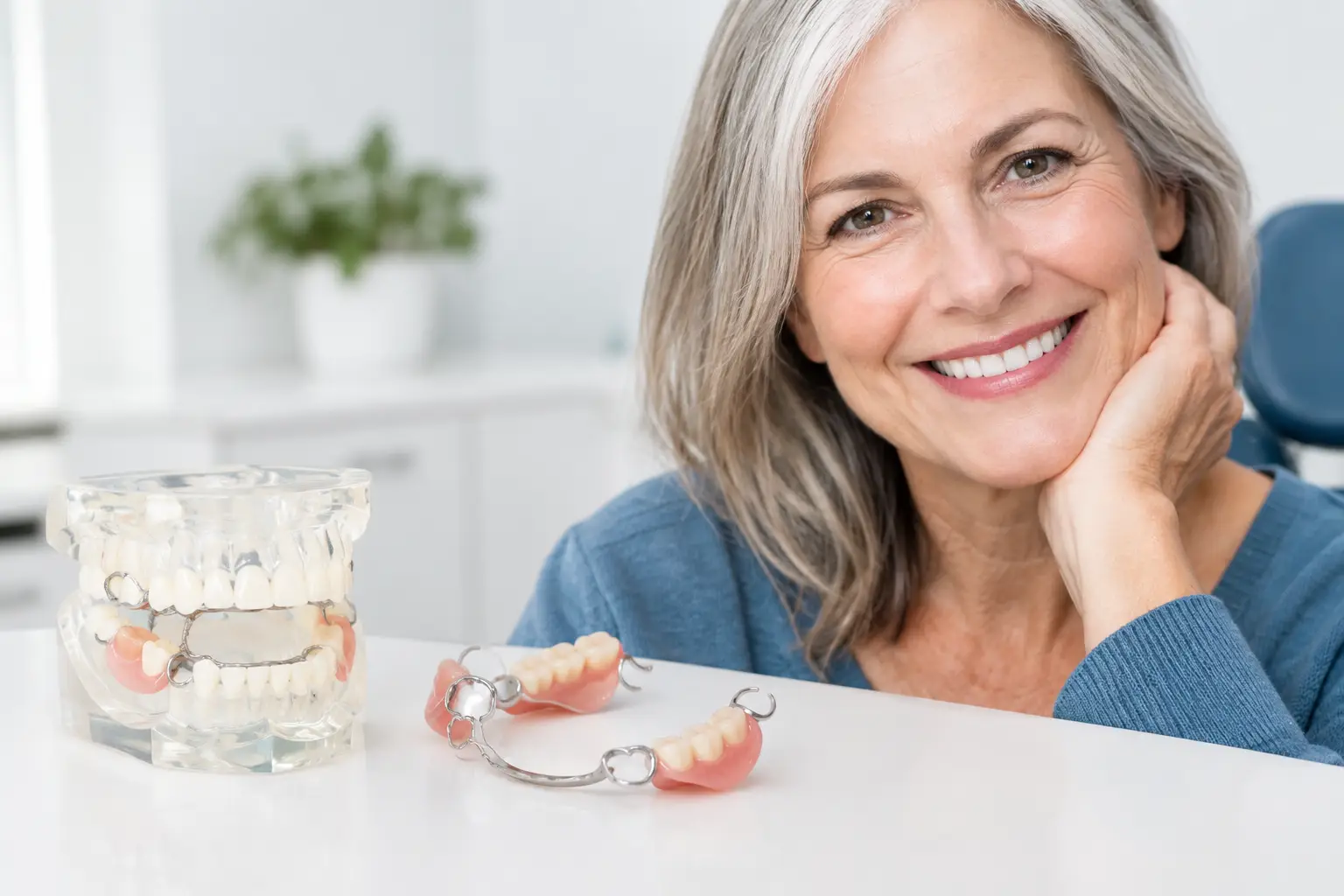
A partial denture can do more than fill a visible gap. It can help you chew more comfortably, speak with greater ease, keep nearby teeth from shifting, and feel less self-conscious when you smile. For many patients, it is a practical, affordable way to replace several missing teeth without committing to a more extensive treatment right away.
Missing teeth affect each person differently. You may notice that food catches in an open space, avoid certain foods, or find yourself covering your mouth in photos. Whatever brought you here, you deserve a treatment plan that feels clear, comfortable, and tailored to your goals.
What Is a Partial Denture?
A partial denture is a removable dental appliance designed to replace one or more missing teeth when some healthy natural teeth remain. Replacement teeth are attached to a gum-colored base that rests gently along the gums. Depending on the design, the denture may be supported by nearby natural teeth, metal clasps, precision attachments, or a combination of these features.
Unlike a full denture, which replaces all teeth in an upper or lower arch, a partial fits around your remaining teeth. It is custom made from impressions or digital scans of your mouth, so the goal is a secure, natural-looking fit that supports daily function.
A well-designed partial denture also helps protect the balance of your bite. When a tooth is missing, surrounding teeth can gradually tilt or drift into that space. This can make cleaning more difficult and may change the way your upper and lower teeth come together.
Types of Partial Dentures and Their Trade-Offs
There is no single “best” partial denture for every smile. The right choice depends on the location and number of missing teeth, the health of your remaining teeth and gums, your bite, your budget, and how important removability or appearance is to you.
Acrylic partial dentures
An acrylic partial denture uses a gum-colored acrylic base with replacement teeth attached. It may include metal clasps to help hold it in place. This option is often one of the more affordable ways to replace missing teeth and can be a useful temporary or transitional solution while a patient heals or considers a longer-term treatment.
The trade-off is that acrylic partials can be bulkier than other designs. They may not feel as stable during chewing, and adjustments can be needed as your mouth changes. Still, for the right situation, they can restore appearance and basic function effectively.
Cast metal partial dentures
A cast metal partial denture has a thin, strong metal framework that supports acrylic gums and replacement teeth. Because metal is durable, the framework can often be made slimmer than an all-acrylic design. Many patients appreciate the secure feel and long-term strength of this option.
The framework is custom designed to rest on specific teeth and may include clasps. Although these clasps are often placed discreetly, they can sometimes be visible when smiling or talking. Your dentist can discuss how the design will look before treatment begins.
Flexible partial dentures
Flexible partials are made from a softer, more flexible material that blends with the gum tissue. They do not typically use traditional metal clasps, which can make them appealing for patients focused on a more natural appearance.
Comfort and appearance are real advantages, but flexible materials are not ideal in every case. They may be harder to adjust or repair, and they do not provide the same kind of support for every bite. A careful exam is essential before choosing this option.
Implant-supported solutions
Dental implants may sometimes be used to support a removable partial denture or to replace individual missing teeth with fixed crowns. Implants can provide excellent stability because they are anchored in the jawbone. They may also help preserve bone in the areas where teeth are missing.
However, implants require surgery, healing time, and a higher initial investment. They also depend on adequate bone and overall oral health. For patients who want a removable option with added stability, an implant-supported partial may be worth discussing. For others, a conventional partial denture may be the more sensible choice.
What to Expect When Getting a Partial Denture
The process begins with a comprehensive exam. Your dentist will evaluate your gums, remaining teeth, bite, jawbone, and the spaces that need to be restored. X-rays or digital imaging may be used to identify concerns that are not visible during a regular exam, such as decay beneath an existing restoration or bone changes around a tooth.
If periodontal disease, untreated cavities, or damaged teeth are present, those concerns should be addressed first. A partial denture depends on the health of the mouth around it. Placing one without treating active problems can lead to discomfort and compromise the teeth meant to support it.
After planning your treatment, your dental team takes impressions or digital scans to create a custom appliance. You may return for a try-in appointment to check the appearance, bite, and tooth shade before the final denture is completed. When your partial is delivered, you will receive instructions on inserting, removing, cleaning, and storing it.
A short adjustment period is normal. Your mouth and muscles need time to adapt, and certain spots may feel sore at first. Do not try to adjust the appliance yourself. A simple professional adjustment can relieve pressure areas and help your partial feel much better.
Eating and Speaking With a Partial Denture
Most patients adapt well, but a partial denture can feel different in the beginning. Start with softer foods cut into smaller pieces, and chew on both sides of your mouth when possible. This helps distribute pressure more evenly and can reduce tipping or movement.
As you become more comfortable, add firmer foods gradually. Very sticky foods, hard candies, ice, and tough foods can put extra stress on the appliance or its supporting teeth. A partial denture can improve chewing ability, but it may not feel exactly like natural teeth or a fixed implant restoration.
Speech changes are usually temporary. Reading aloud, practicing challenging words, and wearing the denture as directed can help your tongue adjust. If clicking, slipping, or persistent difficulty speaking continues, schedule an adjustment rather than trying adhesive as the only solution.
How to Care for Your Partial Denture
Daily care protects both your appliance and your natural teeth. Remove your partial denture and rinse it after meals when possible. Brush it gently each day with a soft denture brush and a cleaner made for dentures. Regular toothpaste can be too abrasive for some denture materials, creating tiny scratches that hold stains and bacteria.
Clean your natural teeth, gums, and tongue thoroughly as well. Pay special attention to the teeth that support the partial, especially near clasps or attachments where plaque can collect. Flossing and professional cleanings remain essential, because a partial denture does not prevent cavities or gum disease.
When the denture is out of your mouth, store it safely in water or a dentist-recommended soaking solution so it does not dry out or warp. Keep it away from hot water, which can change its shape. Never sleep in a partial denture unless your dentist specifically advises otherwise. Removing it overnight gives your gums time to rest and makes cleaning easier.
Bring your appliance to regular dental visits. Your dentist can inspect the fit, check the supporting teeth, polish buildup, and identify wear before it becomes a larger problem. Even a carefully made partial may need adjustments, relining, or replacement over time as gums and bone naturally change.
When to Call Your Dentist
A partial denture should not cause ongoing pain. Contact your dental office if you notice sore spots, cracks, a loose fit, persistent odor, difficulty chewing, bleeding gums, or a change in how your bite feels. These signs may mean the appliance needs an adjustment or that a supporting tooth needs attention.
Do not use household glue to repair a broken partial denture. Store-bought repair products can damage the appliance, alter the fit, and make professional repair more difficult. A dental team can help you understand whether repair, adjustment, or replacement is the safest option.
At Shine & Sparkle Dentistry, we believe replacing missing teeth should feel like a thoughtful step forward, not a confusing decision. With honest guidance and a personalized evaluation, you can choose a partial denture option that supports your health, comfort, and confidence each time you smile.