6505 W Park Blvd #132 Plano, TX 75093

Root Canal vs Extraction: How to Choose
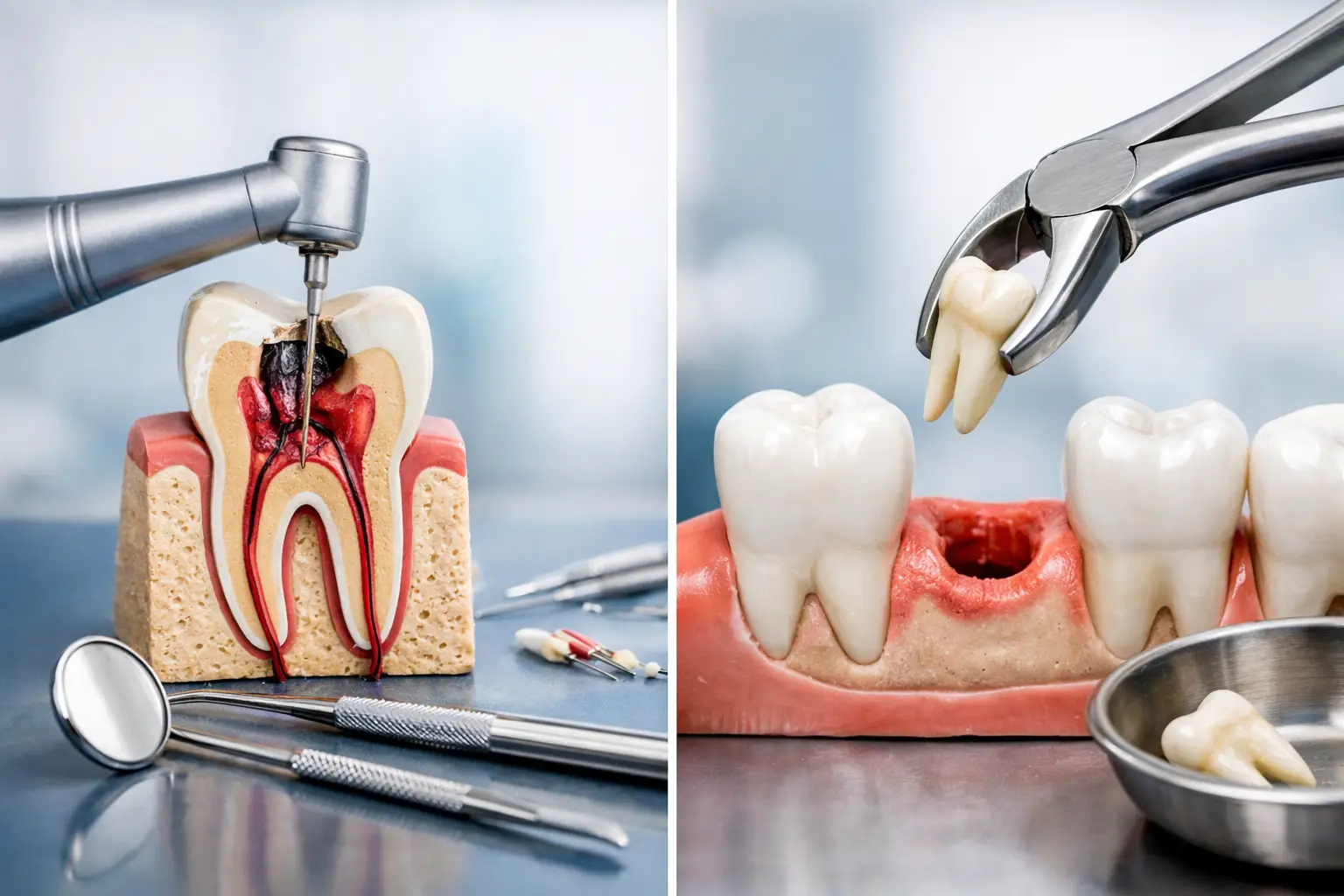
A bad toothache can make every choice feel urgent. When your dentist says the tooth may need a root canal or an extraction, the real question behind root canal vs extraction is usually simple: which option will relieve pain, protect your health, and make the most sense for your smile long term?
For many patients, that answer depends on more than the tooth itself. It also depends on how damaged the tooth is, whether there is an active infection, how much natural structure can be saved, your budget, your timeline, and how you feel about future dental work. A caring dentist should walk you through those factors clearly so you feel informed instead of pressured.
Root canal vs extraction: the basic difference
A root canal is designed to save your natural tooth. The infected or inflamed tissue inside the tooth is removed, the canals are cleaned and sealed, and the tooth is usually restored with a filling or crown. The goal is to keep the tooth in place while stopping pain and infection.
An extraction removes the tooth completely. In some cases, this is the healthiest or most predictable option, especially if the tooth is too damaged to restore. Once the tooth is removed, the next conversation is often about replacement, such as a dental implant, bridge, or partial denture.
That difference matters more than it may seem at first. Saving a tooth and removing a tooth can both solve the immediate problem, but they often lead to very different long-term outcomes.
When a root canal may be the better choice
In general, dentists prefer to save a natural tooth when it is realistic to do so. Your natural tooth helps you chew efficiently, keeps nearby teeth in position, and maintains normal bite function. If the tooth has enough healthy structure left and the infection can be treated successfully, a root canal is often the more conservative option.
A root canal may make sense when the pulp inside the tooth is infected but the outer tooth can still be restored. This is common with deep decay, a cracked tooth that has not split beyond repair, or trauma that affects the nerve. Once treated and protected with the right restoration, many root canal teeth last for years.
Patients are often surprised to learn that modern root canal treatment is usually much more comfortable than they expected. The procedure is performed to remove the source of pain, not create more of it. With local anesthesia and a gentle approach, many people describe it as similar to getting a filling, just more involved.
When extraction may be the better choice
Sometimes saving the tooth is simply not the best option. If the tooth is severely broken down, cracked below the gumline, loose from advanced gum disease, or damaged in a way that leaves too little healthy structure, extraction may offer a more predictable outcome.
Extraction may also be recommended if a previous root canal has failed and retreatment is unlikely to succeed, or if the tooth has extensive decay that makes restoration unrealistic. In some emergency situations, removing the tooth can provide the fastest path to eliminating a serious source of infection.
There are also practical considerations. If a patient cannot commit to the follow-up restoration a root canal tooth needs, extraction may be discussed more seriously. That said, replacing a missing tooth is its own process and expense, so removal is not always the simpler option once you look beyond the first appointment.
Cost is important, but think beyond the first bill
A lot of people compare root canal vs extraction based on price alone, and that is understandable. An extraction often costs less upfront than a root canal with a crown. If you are in pain and trying to manage expenses, the lower initial number can feel like the obvious choice.
The bigger picture is what happens next. If you remove a tooth and do not replace it, neighboring teeth can start to shift, your bite may change, and chewing can become less comfortable. Depending on the tooth’s location, the missing space may also affect your appearance and confidence. Replacing the tooth with an implant or bridge can restore function and appearance, but that adds to the total cost.
By contrast, a root canal usually has a higher immediate cost, but it may preserve the natural tooth and avoid replacement treatment. The better value depends on the tooth, your oral health, and your long-term goals. Honest guidance matters here because the cheapest short-term answer is not always the most affordable choice over time.
Recovery and comfort
Many patients assume extraction is easier because the tooth is simply removed. In reality, recovery varies for both procedures.
After a root canal, it is common to have mild soreness for a few days, especially if there was significant infection or inflammation before treatment. Most patients return to normal routines quickly. The key is making sure the tooth is properly restored afterward so it stays strong.
After an extraction, the body has to heal the empty socket. You may need to avoid certain foods, follow careful aftercare instructions, and watch for complications such as dry socket. Some patients recover quickly, while others need a little more downtime depending on the tooth and the complexity of the extraction.
So which is easier? It depends. A straightforward root canal on a restorable tooth may feel less disruptive than removing the tooth and planning for replacement. On the other hand, if the tooth is badly compromised, extracting it may spare you from repeated treatment on a tooth with a poor prognosis.
What happens if you do nothing?
This is the option many people consider quietly, especially if the pain comes and goes. Unfortunately, infected teeth do not heal on their own. The infection can spread, the pain can intensify, swelling may develop, and the treatment can become more complex the longer you wait.
Delaying care can also reduce your options. A tooth that might have been saved with a root canal today could become non-restorable later. If you are deciding between treatment paths, getting evaluated sooner gives you the best chance of choosing based on what is healthiest, not just what is left.
How dentists decide between root canal and extraction
A good recommendation should never feel one-size-fits-all. Dentists usually look at the amount of healthy tooth structure remaining, the location of the tooth, the extent of infection, gum and bone support, and whether the tooth can be restored in a durable way.
The position of the tooth matters. Saving a visible front tooth may be especially valuable for appearance and confidence. Saving a back tooth can be important for chewing and keeping your bite balanced. Your overall dental health matters too. If there are several issues happening at once, your treatment plan may need to account for the bigger picture.
This is also where your preferences matter. Some patients strongly want to preserve natural teeth whenever possible. Others want the option with the fewest future visits. Neither mindset is wrong. The best care happens when clinical judgment and patient goals are discussed openly.
Questions worth asking at your appointment
If you are trying to decide, ask whether the tooth can be predictably saved, what restoration will be needed after treatment, what the total expected cost looks like over time, and what happens if the tooth is removed and not replaced right away.
You should also ask about comfort, healing time, and long-term success rates in your specific case. A trustworthy dental team will explain the reasoning in plain language, not rush you through it.
At Shine & Sparkle Dentistry, that kind of conversation matters because patients deserve honest recommendations and care that supports both immediate relief and long-term confidence.
The right choice is the one that protects your future smile
Root canal vs extraction is not really about picking the faster-sounding procedure. It is about choosing the option that gives you the healthiest, most stable result for your specific tooth and your life. If the tooth can be saved predictably, preserving it is often worth serious consideration. If it cannot, removing it and planning the right replacement may be the healthiest path forward.
The most helpful next step is not guessing. It is having your tooth evaluated by a dentist who will explain what is possible, what is practical, and what will help you feel comfortable moving forward.