6505 W Park Blvd #132 Plano, TX 75093

Jawbone Grafting for a Stronger Implant Foundation
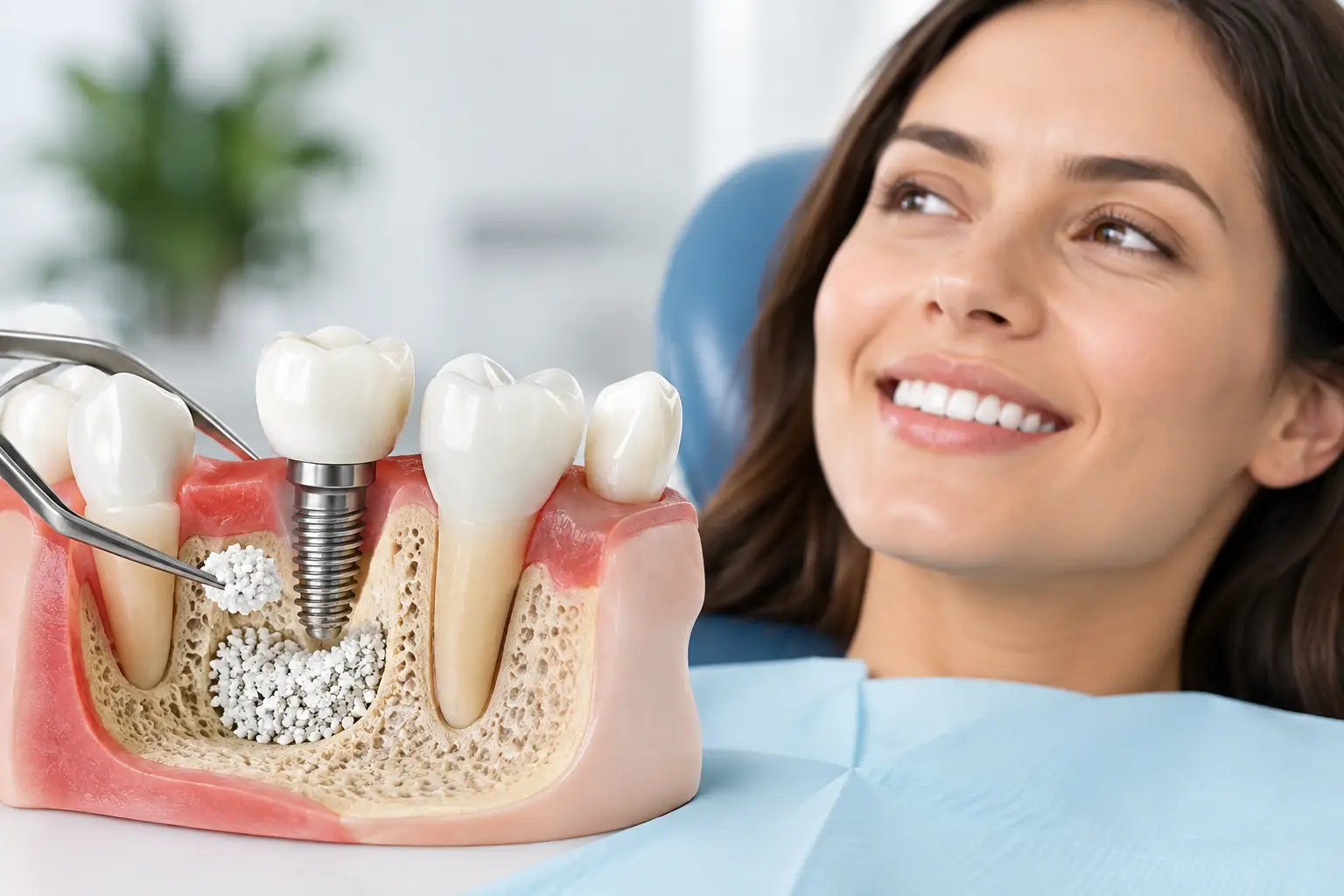
A missing tooth affects more than the space you see when you smile. Over time, the jawbone beneath that tooth can lose the stimulation it needs to stay strong. Jawbone grafting is a treatment that rebuilds or preserves bone in that area, often making it possible to place a dental implant with greater stability and confidence.
For many patients, hearing the word “graft” can sound intimidating. The reality is that grafting is a common part of modern implant dentistry, and every recommendation should begin with a clear conversation about your needs, your comfort, and your long-term goals. At Shine & Sparkle Dentistry, we believe you deserve to understand why a procedure is being recommended before deciding whether it is right for you.
Why Jawbone Grafting May Be Needed
Your jawbone is living tissue. Tooth roots place gentle pressure on the bone every time you chew, helping keep it active and dense. When a tooth is lost or removed, that stimulation stops. The body may gradually resorb, or break down, bone in the empty area.
Bone loss does not happen at the same rate for everyone. It can be influenced by how long the tooth has been missing, gum disease, infection, injury, denture pressure, smoking, and overall health. Some patients have enough healthy bone for an implant even years after losing a tooth. Others may need grafting soon after an extraction to help protect the shape and strength of the jaw.
A dental implant needs adequate bone around it to function like a secure tooth root. If there is not enough height, width, or density in the jaw, placing an implant without rebuilding the site can compromise the result. A graft may create the support needed for a more predictable, natural-looking restoration.
What Happens During Jawbone Grafting?
Jawbone grafting involves placing bone material in an area where bone has been lost or needs to be preserved. The material acts as a framework that supports your body as it builds new bone. Over the following months, your natural bone gradually integrates with the graft material.
The source of graft material depends on your treatment plan. It may be processed donor bone, animal-derived mineral material, synthetic material, or, less commonly, bone taken from another area of your own body. Your dentist will explain the material being considered, why it suits your situation, and what you can expect during healing.
The procedure is usually performed with local anesthetic. If you feel anxious about dental treatment, let your dental team know before your visit. Comfort matters, and a gentle approach, clear explanations, and appropriate options can make a significant difference in how you feel throughout care.
After the graft is placed, the area may be covered with a protective membrane and closed with sutures. In many cases, the procedure can be completed in the same visit as a tooth extraction. This is often called socket preservation, because it helps maintain the bone in the empty socket after a tooth is removed.
Socket Preservation After an Extraction
When a tooth cannot be saved, the timing of treatment matters. Placing graft material at the time of extraction can help limit the bone shrinkage that commonly follows tooth loss. It does not guarantee that no future grafting will be needed, but it can improve the foundation for an implant, bridge, or other restoration later.
This approach may be especially helpful for visible front teeth, where preserving gum contours and facial appearance is an important part of the final result. It can also be a practical choice for patients who are not ready to move forward with an implant immediately but want to keep that option open.
Grafting for Existing Bone Loss
If a tooth has been missing for a while, the grafting approach may be more involved. Your dentist may recommend building up the width or height of the ridge where the tooth once sat. For upper back teeth, a sinus lift may sometimes be needed when the sinus cavity has expanded into the space above the jawbone.
These procedures are not one-size-fits-all. Digital imaging and a careful exam help determine where bone is needed and whether grafting can be completed before or at the same time as implant placement. Some patients can receive an implant and graft during one visit. Others benefit from allowing the graft to heal first.
How Long Does Healing Take?
Healing time depends on the size and location of the graft, the type of material used, your overall health, and whether an extraction or implant was completed at the same appointment. Small socket-preservation grafts may heal enough for the next phase in a few months. Larger grafts can require several months before the area is ready for an implant.
That waiting period has a purpose. The goal is not simply to fill an area on an X-ray. The goal is to allow your body to form healthy, stable bone that can support a restoration for years to come.
During healing, it is common to have mild swelling, tenderness, and some bruising. Most patients manage discomfort with prescribed or over-the-counter medication as directed. Your dentist may recommend soft foods for a short time and will give you specific instructions for keeping the surgical area clean.
Avoid smoking and vaping during healing. Nicotine reduces blood flow and can interfere with the body’s ability to heal properly, increasing the risk of infection or graft failure. If you have diabetes, take blood thinners, or have a medical condition that affects healing, share that information with your dentist so your care can be planned safely.
What Does Jawbone Grafting Feel Like?
Patients often worry that grafting will be painful. During the procedure, local anesthetic is used to numb the area, so you should not feel sharp pain. You may notice pressure or vibration, depending on the treatment being performed.
Afterward, many people describe the experience as similar to recovering from a tooth extraction. The first few days are typically the most noticeable, with swelling or soreness improving steadily afterward. More extensive grafting may involve a longer recovery period, but your dental team should prepare you for what is normal and when to call.
Contact your dentist promptly if you have worsening pain after initial improvement, persistent heavy bleeding, fever, significant swelling, or a concern that the graft material has shifted. It is always better to ask a question than to wait and worry.
Is Grafting Always Necessary Before an Implant?
No. Many implant candidates do not need a graft. A thorough evaluation will include an exam and detailed imaging to assess the bone available at the proposed implant site. If your jawbone has sufficient strength and volume, the implant process may move forward without additional grafting.
Even when grafting is recommended, it is not automatically the only path. Depending on your smile, bite, bone anatomy, budget, and goals, alternatives may include a dental bridge, partial denture, or a different implant treatment approach. Honest guidance means discussing the benefits and limitations of each option, not pushing a procedure that does not fit your needs.
The Long-Term Value of a Healthy Foundation
A beautiful crown is the visible part of an implant, but the health of the bone underneath is what helps support it. Jawbone grafting can add time to a treatment plan, and that can feel frustrating when you are eager to replace a missing tooth. Still, taking the time to build a sound foundation may protect the comfort, appearance, and durability of your final result.
If you have a missing tooth, an upcoming extraction, or have been told you may not have enough bone for an implant, a personalized evaluation can provide clarity. With thoughtful planning and gentle, attentive care, you can make decisions about your smile feeling informed, supported, and confident.