6505 W Park Blvd #132 Plano, TX 75093

Night Guard Versus Retainer: Know the Difference
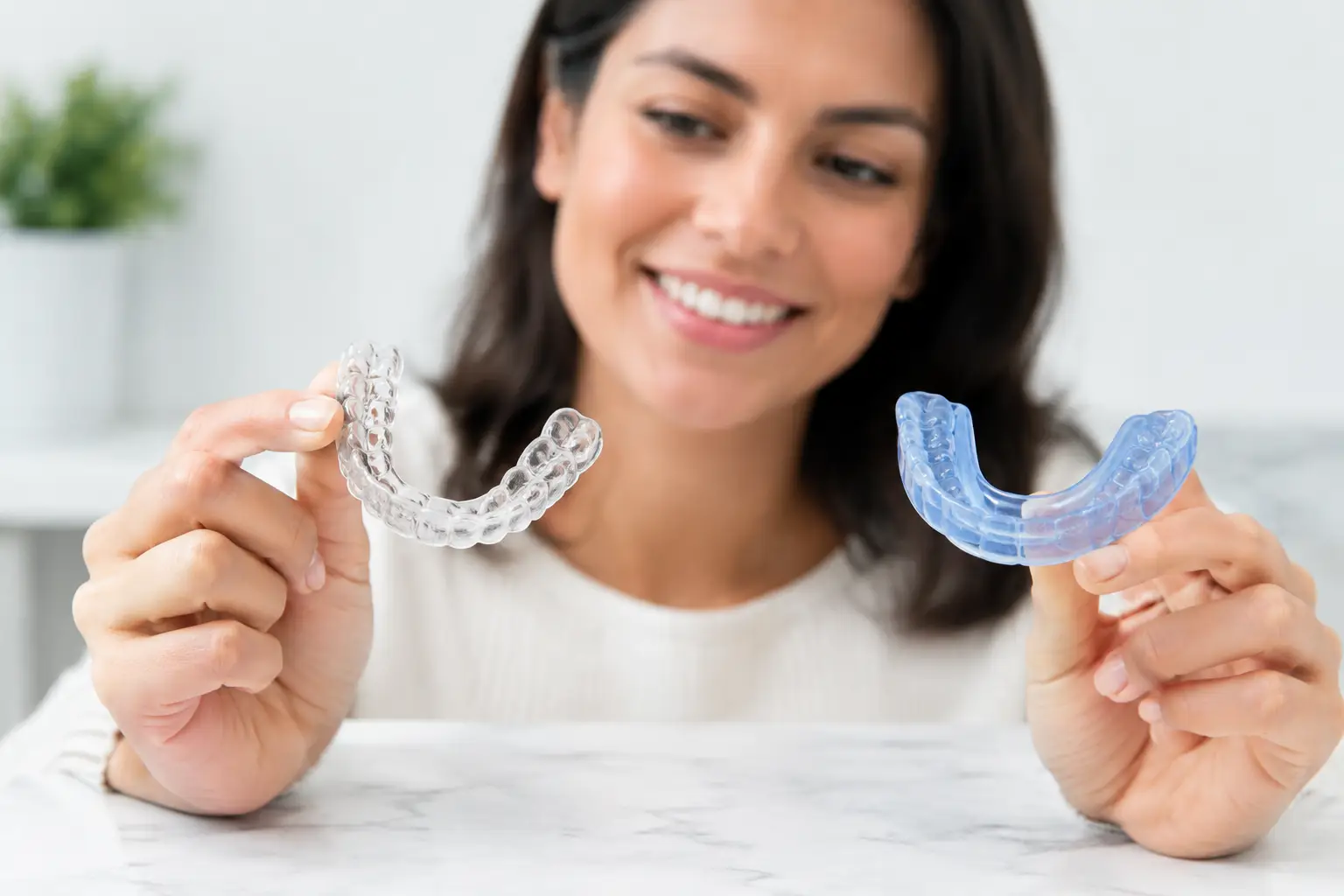
Waking up with a sore jaw, worn tooth edges, or a headache can make you wonder whether you need a night guard versus retainer. They may look similar at first glance, but these dental appliances are designed to solve different problems. Choosing the right one protects both your comfort and your investment in your smile.
A retainer helps keep teeth in their corrected positions after orthodontic treatment. A night guard helps reduce the damage caused by clenching or grinding, also called bruxism. For some patients, the right answer is clear. For others, especially people who have completed braces or clear aligner treatment and also grind their teeth, a dentist’s evaluation matters.
Night Guard Versus Retainer: The Main Difference
The simplest distinction is purpose. A retainer holds teeth where they belong. A night guard creates a protective barrier between the upper and lower teeth while you sleep.
Retainers are typically worn after braces or clear aligners because teeth can gradually shift throughout life. The bone and tissues around your teeth need time to adapt after orthodontic movement. Wearing the retainer as directed helps preserve the straight, balanced smile you worked hard to achieve.
A night guard is made for people who clench or grind their teeth, often without realizing it. Grinding can place heavy pressure on teeth, fillings, crowns, and jaw joints. Over time, it may contribute to flattened or chipped teeth, tooth sensitivity, worn restorations, jaw soreness, and morning headaches. A properly fitted guard helps distribute that force and reduces tooth-on-tooth contact.
Even when both appliances are clear and removable, they are not automatically interchangeable.
What a Retainer Does for Your Smile
A retainer is an orthodontic appliance. Depending on your treatment plan, it may be a clear removable tray that fits closely over the teeth, a traditional removable retainer with wire and acrylic, or a thin fixed wire bonded behind the front teeth.
Its job is to maintain alignment. It does not move teeth in the same way active braces or aligners do. Instead, it helps prevent relapse, which is the natural tendency for teeth to drift back toward their previous positions.
Your dentist or orthodontic provider will recommend a wear schedule based on your needs. Some patients wear retainers full-time immediately after treatment, then transition to nighttime wear. Others may need regular nighttime retention for the long term. Skipping it for weeks or months can make the retainer feel tight or stop fitting altogether, which is a sign that teeth may have shifted.
A retainer can offer a small amount of coverage from normal nighttime contact, but that does not mean it is built to handle significant grinding forces. Thin clear retainers may crack, wear through, or distort when used as a substitute for a guard. More importantly, a damaged retainer may no longer hold your teeth in the intended position.
What a Night Guard Does While You Sleep
A night guard is designed around bite protection. It covers either the upper or lower teeth and creates a smooth surface that helps limit the destructive effects of grinding and clenching. Your dentist may recommend a soft, hard, or dual-layer material based on the strength of your bite, your symptoms, and the condition of your teeth and restorations.
A soft guard may feel comfortable for a person with mild clenching, while a hard acrylic guard can be a better choice for heavier grinding. There is no universal “best” guard. The best option is one that fits securely, supports a healthy bite, and is made for your specific needs.
Many people only discover they grind when a partner hears the sound, or when a dentist notices wear patterns during an exam. Other clues include tight facial muscles, a tired jaw on waking, unexplained chips, or frequent headaches near the temples. Bruxism can also be related to stress, sleep disruption, certain medications, or an uneven bite, so an exam can help identify factors worth addressing.
A night guard protects teeth, but it is not a cure for every jaw symptom. Persistent pain, locking, clicking, or limited jaw movement deserves professional attention. These concerns can involve the jaw joints, muscles, teeth, or bite and should not be self-diagnosed.
Can You Wear a Retainer as a Night Guard?
Sometimes patients ask whether they can simply wear their clear retainer at night to manage grinding. If you have no symptoms and only light tooth contact, your dental provider may advise that continued retainer wear is appropriate for retention. But if you are actively grinding or clenching, a standard retainer usually is not the right long-term replacement for a night guard.
There are a few reasons. Retainers are commonly thinner than guards and may wear out quickly under repeated pressure. They are designed to fit around tooth positions, not necessarily to balance grinding forces. If the material breaks, you could lose the retention benefit as well as the limited protection it was providing.
The reverse is also true: a night guard should not be assumed to replace a retainer. A guard may fit over the teeth, but it may not hold them in their orthodontically planned position. Wearing only a guard after orthodontic treatment can allow unwanted movement.
For patients who need both functions, a dentist may be able to recommend a coordinated approach. This might mean wearing a retainer at certain times and a separate guard at night, or creating a custom appliance after reviewing your orthodontic history, bite, and signs of wear. The right plan depends on how much retention you need and how strongly you grind.
Why a Custom-Fitted Appliance Is Worth Considering
Over-the-counter guards are easy to find and can be tempting when your jaw is uncomfortable. They may provide temporary cushioning for some people, but bulky, loose, or poorly fitted appliances can be uncomfortable and may not provide ideal bite support. A boil-and-bite guard also cannot account for your individual tooth positions, dental work, or jaw movement as precisely as a custom appliance.
A custom night guard is made from an impression or digital scan of your teeth. This allows your dentist to evaluate the fit, thickness, bite relationship, and comfort before you rely on it nightly. That careful fit can be especially valuable if you have crowns, veneers, implants, bridges, active gum concerns, or a history of jaw pain.
Custom retainers offer similar advantages after orthodontic treatment. A close, accurate fit helps keep teeth stable and makes it easier to notice early if something has changed. If your old retainer feels painfully tight, do not force it into place. Your teeth may have moved, and forcing an appliance can cause discomfort or damage.
At Shine & Sparkle Dentistry, patients can receive one-on-one guidance about whether their symptoms point to grinding, orthodontic shifting, or both. A personalized exam helps replace guesswork with a plan that feels clear and manageable.
Caring for Your Guard or Retainer
Both appliances need regular care to stay clean and effective. Rinse them with cool water after use, then gently brush them with a soft toothbrush and mild soap or a cleanser recommended by your dental team. Hot water can warp many materials, so avoid it.
Store the appliance in its protective case when it is not in your mouth. Pets are drawn to the scent of saliva and can quickly chew through a guard or retainer. Keep it away from heat, and bring it to dental visits so your provider can check for cracks, buildup, or fit changes.
If a night guard starts feeling loose, rough, cracked, or uneven, schedule an evaluation. If a retainer no longer fits as it once did, that is also a reason to call. Small problems are often easier to address before they become a larger concern for your teeth or bite.
When to Schedule a Dental Visit
Make an appointment if you wake with jaw pain, notice chipped or flattened teeth, experience frequent headaches, hear grinding at night, or find that your retainer no longer fits. You should also seek guidance if you have finished orthodontic treatment but are unsure how often to wear your retainer.
The goal is not simply to give you another appliance to wear. It is to protect your teeth, keep your smile stable, and help you sleep more comfortably. With the right evaluation and a custom recommendation, you can feel informed and confident about what your smile needs next.