6505 W Park Blvd #132 Plano, TX 75093

Tooth Extraction Versus Root Canal: Which?
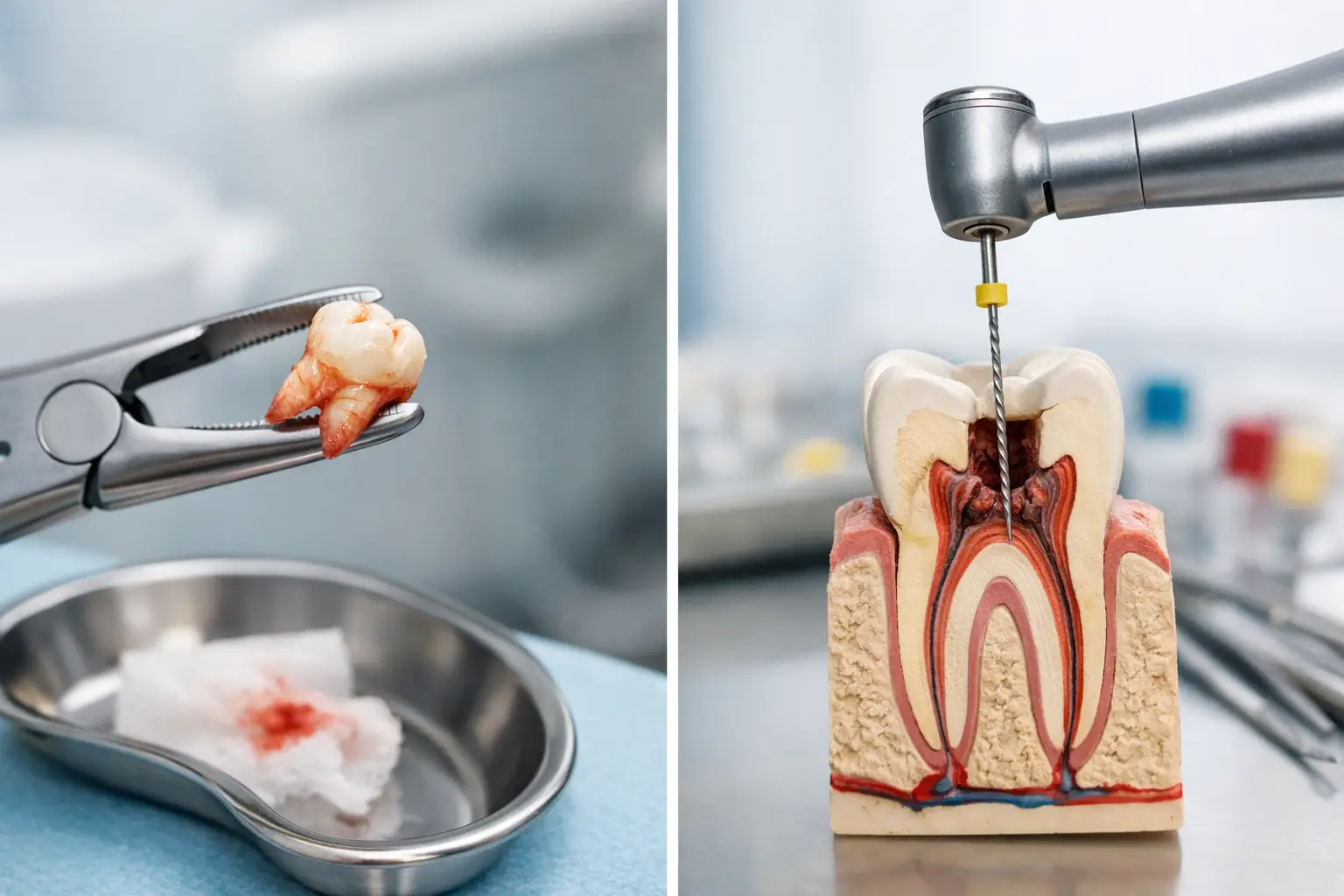
A severe toothache can make every decision feel urgent. When a damaged or infected tooth is involved, the choice often comes down to tooth extraction versus root canal. Both treatments can relieve pain and protect your overall oral health, but they solve the problem in very different ways. The best option depends on what is happening beneath the surface of your tooth, how much healthy structure remains, and what will serve your smile well in the years ahead.
At Shine & Sparkle Dentistry, we believe you should never feel rushed into a decision you do not understand. A careful exam, digital imaging, and an honest conversation give you the information needed to feel informed and confident about your care.
What a Root Canal Does
A root canal is a treatment designed to save a natural tooth when the soft tissue inside it, called the pulp, becomes inflamed or infected. This can happen because of deep decay, a crack, repeated dental work, or an injury to the tooth.
During treatment, your dentist gently removes the infected pulp, cleans and disinfects the inner canals of the tooth, then seals the space. In many cases, a crown is placed afterward to strengthen and protect the tooth from future fracture.
Despite its reputation, modern root canal treatment is typically no more uncomfortable than receiving a filling. Local anesthetic and thoughtful, gentle care help keep you comfortable throughout the visit. In fact, the purpose of a root canal is to stop the pain caused by infection, not add to it.
Saving your natural tooth has meaningful benefits. Your own tooth helps maintain normal chewing function, supports the alignment of nearby teeth, and preserves the bone in your jaw. It also avoids the need to replace a missing tooth right away.
When a Root Canal May Be Recommended
A root canal is often a strong option when the tooth is infected but can still be restored predictably. Your dentist will look at the amount of healthy tooth above the gumline, the condition of the roots, the level of bone support, and whether a crack extends too far below the gumline.
Symptoms that may point to a tooth needing root canal treatment include lingering sensitivity to hot or cold, pain when biting, facial swelling, a pimple-like bump on the gums, or a tooth that has become darker than surrounding teeth. However, some infections produce few noticeable symptoms. That is one reason prompt exams are so valuable when a tooth has a deep cavity, crack, or old restoration that has failed.
What Happens During a Tooth Extraction
A tooth extraction removes a tooth from its socket in the jawbone. It may be a straightforward procedure for a visible tooth, or a more involved surgical procedure if the tooth is broken at the gumline, impacted, or difficult to access.
Extraction can be the healthiest choice when a tooth cannot be saved. For example, a tooth may have severe decay below the gumline, advanced periodontal disease, a vertical root fracture, or damage so extensive that a crown and root canal would not have a reliable long-term outcome.
Your comfort matters during extraction. The area is numbed carefully, and your dentist will explain what to expect before beginning. Afterward, a blood clot forms in the socket and begins the healing process. Following aftercare instructions is essential, especially during the first several days, to protect the clot and lower the chance of dry socket.
Removing a problem tooth can bring fast relief from infection and pain. But it also creates a gap that deserves attention. Teeth can gradually shift toward an empty space, opposing teeth may over-erupt, and the jawbone in that area can lose volume over time. Depending on the location of the tooth, replacement with a dental implant, bridge, or partial denture may be recommended.
Tooth Extraction Versus Root Canal: The Key Differences
The central difference is simple: a root canal keeps your natural tooth, while an extraction removes it. Yet the decision involves more than choosing the quicker procedure or the lower upfront fee.
A root canal often requires a restoration afterward, particularly for back teeth that absorb heavy chewing forces. The total treatment may include the root canal and a custom crown. This can be a greater initial investment than an extraction alone, but preserving a healthy, functional natural tooth can be worthwhile for many patients.
An extraction may cost less at the time of treatment, especially when a tooth has a poor prognosis. Still, the long-term cost can increase if you choose to replace the tooth. A dental implant, for example, is a highly durable option that helps preserve bone and function, but it involves additional treatment and healing time. A bridge or partial denture may be appropriate in other situations.
Recovery is different as well. After a root canal, most people return to normal routines quickly, although the treated tooth may feel tender for a few days. After an extraction, the gum and bone need time to heal. Mild swelling, tenderness, and dietary adjustments are common during the early recovery period.
Neither treatment is automatically better. A tooth that can be saved successfully is often worth saving. A tooth with a poor long-term outlook may be better removed than repeatedly repaired. Honest guidance matters because the right recommendation should be based on your health, comfort, goals, and budget, not a one-size-fits-all answer.
Factors Your Dentist Will Consider
Your dentist will begin by assessing whether the tooth is restorable. A small amount of decay near the nerve may still be treatable with a root canal and crown. In contrast, decay or a fracture extending deeply below the gumline can make long-term restoration impractical.
The health of your gums and jawbone also matters. Significant bone loss from gum disease can leave a tooth unstable even if the infection inside the tooth can be treated. The location of the tooth matters, too. Replacing a visible front tooth has cosmetic considerations, while replacing a missing back tooth may be important for chewing and preventing shifting.
Your medical history, future dental plans, and personal priorities are part of the conversation. Some patients want the most conservative option possible. Others have a tooth that has already needed several repairs and prefer a more definitive solution. There is room for both perspectives when the clinical facts are clear.
Questions Worth Asking at Your Visit
If you are deciding between treatments, ask whether the tooth can be restored with a predictable long-term result and whether a crown will be needed after a root canal. Ask what could happen if you delay care, what replacement options would be available after extraction, and how each choice affects your future costs and appointments.
You should also feel comfortable asking about pain control and recovery. Dental anxiety is common, especially when you are already hurting. A supportive dental team will explain each step in plain language and help you choose a treatment plan that feels manageable.
Do Not Wait on Signs of Infection
Whether you ultimately need a root canal or extraction, delaying treatment can allow an infection to spread. Dental infections do not reliably disappear on their own. Pain may temporarily fade if the nerve inside a tooth stops responding, but the underlying infection can remain and continue damaging nearby tissue.
Call for prompt dental care if you have swelling in the face or gums, severe tooth pain, fever, trouble swallowing, or difficulty breathing. Trouble breathing or swallowing requires immediate emergency medical attention.
If a tooth is causing pain, you do not have to figure out the answer alone. A thoughtful evaluation can replace uncertainty with a clear plan, relieve discomfort, and help you protect the healthy, confident smile you deserve.